The last week of school has a particular kind of energy. The year is winding down, but for the MVP educators, the planning for next year is already beginning. Which units could use stronger investigations? Where did students seem most engaged, and where did momentum stall? What would make the lab experience feel more purposeful for everyone in the room?
If you're in this headspace, read on. We've got a practical framework for selecting NGSS-aligned labs across biology, physics, and earth science for high school, written for educators who want investigations that go beyond checking a standards box.
The short answer to "how do I choose a good NGSS lab" is: a good lab asks students to do something with science, not just observe it. The Next Generation Science Standards are built around three dimensions, disciplinary core ideas, science and engineering practices, and crosscutting concepts, and the best labs engage all three simultaneously rather than treating them as separate checkboxes.
What Makes a Lab Truly NGSS-Aligned?
A lab can reference a expected performance in its materials and still be structured around following steps and recording predetermined results. That's a valid starting point, but it's not what the standards are designed to support.
A genuinely NGSS-aligned lab has a few defining characteristics. Students are asking a question, not just answering one someone else wrote. They're making decisions about how to collect and analyze data, not just filling in a pre-formatted table. They're constructing an explanation or argument based on evidence, not confirming a result the teacher already told them. And they're connecting what they're doing to a pattern or principle that shows up across science, one of the crosscutting concepts like cause and effect, systems and system models, or stability and change.
The three-dimensional learning framework at nextgenscience.org is the clearest reference for evaluating whether a lab is doing this work. If you haven't read the crosscutting concepts document recently, it's worth revisiting before you plan fall units. The concepts are the connective tissue between disciplines, and they're where the most powerful cross-unit learning happens.
How Do I Choose Labs for Biology?
The short answer: prioritize labs where students interact with living or once-living material and have to explain a pattern they observe rather than confirm one they were told about.
High school biology performance expectations cluster around a few big ideas: heredity and variation (HS-LS3), natural selection and evolution (HS-LS4), ecosystems and interdependence (HS-LS2), and the molecular basis of life (HS-LS1). The best labs for these standards share a common feature: they generate data that students have to interpret, not data that confirms a predetermined answer.
For heredity and variation, phenotype-sorting investigations using plants grown under different conditions are among the most accessible and standards-rich options available. Students observe variation, generate hypotheses about cause, and connect observations to HS-LS3-2, which asks them to make and defend a claim about the sources of genetic variation.
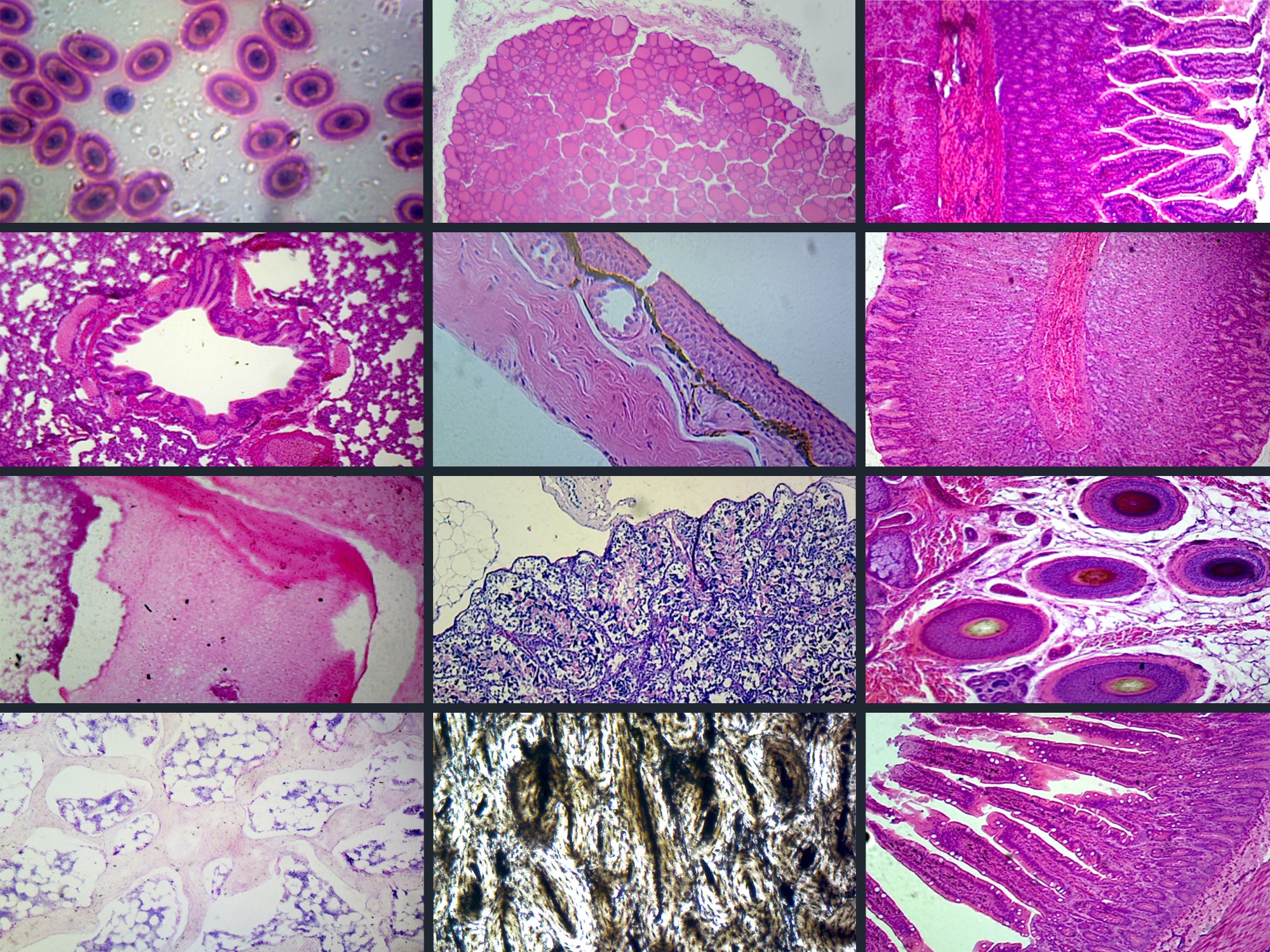
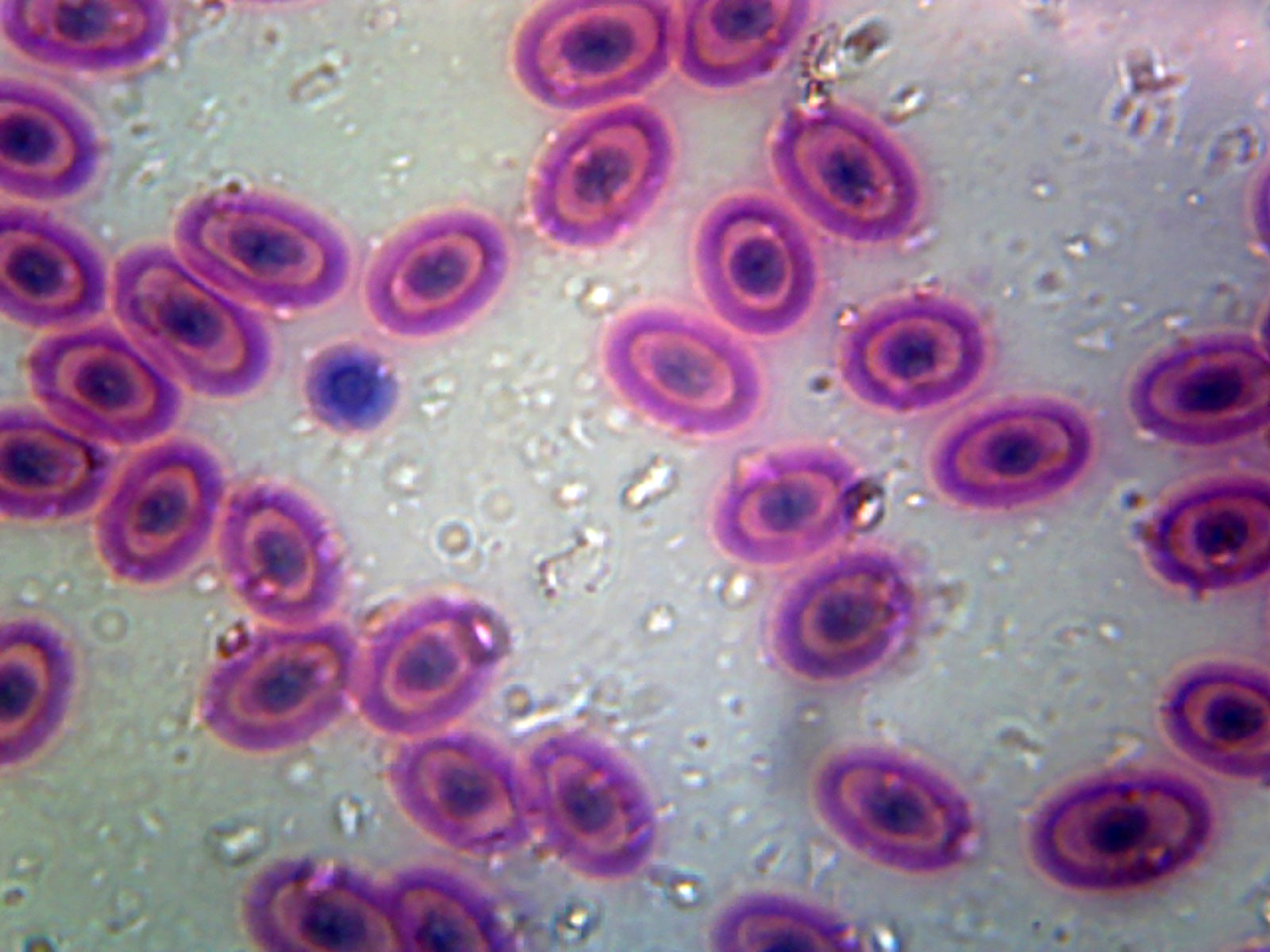
For ecosystems work, consider whether students are observing life directly or encountering it through description. Watching a living microorganism move under magnification tends to shift how students think about decomposition and nutrient cycling in ways that reading about it rarely does. HS-LS2-6 asks students to evaluate claims about ecosystem stability, and that evaluation is richer when students have seen the invisible biology driving it firsthand.
Which Physics Labs Work Best for NGSS?
The short answer: look for labs where students can manipulate a variable, measure a real effect, and connect their data to an underlying model or law.
High school physics performance expectations span motion and forces (HS-PS2), energy (HS-PS3), waves and electromagnetic radiation (HS-PS4), and matter and its interactions (HS-PS1). The discipline rewards precision, and the best labs give students something they can actually measure changing in response to something they control.
For force and motion, few demonstrations do more conceptual work per minute than our Monkey & Hunter Kit. The setup is deceptively simple: a projectile is launched at a target the moment the target is released. Despite gravity acting on both objects, the projectile hits the falling target every time, powerfully challenging students' intuitive ideas about motion. The moment of impact tends to produce genuine surprise, which is exactly the condition under which conceptual change happens. The kit connects directly to HS-PS2-1, which asks students to analyze data supporting Newton's second law, and extends naturally into mathematical modeling of trajectories, parabolic paths, and the independence of horizontal and vertical motion.
For waves and sound, our Wave Generator Deluxe Kit covers more NGSS ground than almost any single piece of equipment in a high school physics lab. The kit includes a vibration generator, frequency generator, and Chladni plates, and each component opens a different window into wave behavior. As the NGSS guide developed by our curriculum team describes it: "Chladni plates turn invisible sound waves into captivating patterns using sand, metal, and vibration." Students adjust frequency, watch the sand redistribute into geometric nodal patterns, and directly observe the relationship between frequency and wavelength, connecting to HS-PS4-1. The interference investigation, where students walk the room identifying constructive and destructive interference zones from two speakers playing the same tone, addresses HS-PS4-3 and HS-PS4-5 while generating student-collected spatial data that no worksheet can replicate.
Earth Science Labs Worth the Setup Time
The short answer: prioritize labs that connect local, observable phenomena to large-scale Earth systems, and that give students data from the real world rather than simulated data from a worksheet.
High school earth and space science performance expectations address Earth's systems (HS-ESS2), Earth's history (HS-ESS1), and human impacts on Earth systems (HS-ESS3). The discipline is inherently systems-oriented, which makes it a natural home for crosscutting concepts like stability and change, energy and matter, and cause and effect.
Weather and atmosphere investigations are accessible, locally relevant, and standards-rich. A sling psychrometer investigation measuring relative humidity and predicting dew point gives students a direct experience of the water cycle as a measurable, dynamic system rather than a diagram in a textbook, connecting to HS-ESS2-4.
For geology and Earth history, labs that put actual rock and mineral specimens in students' hands consistently outperform simulated alternatives. Identifying rock types, performing hardness and streak tests, and connecting specimens to the rock cycle addresses HS-ESS2-1 in a way that builds genuine observational skill. Our Liquefaction Experiment Apparatus takes this further, letting students investigate how saturated soil behaves under stress, a direct connection to earthquake science and HS-ESS2-1 that's difficult to replicate any other way.
What Questions Should I Ask Before Committing to a Lab?
Before adding any investigation to your fall lineup, run it through these five questions:
Does it ask students to figure something out, or just confirm something? If the answer is predetermined and students are just following steps to arrive at it, the lab may work better as a demonstration than a full investigation.
Which science and engineering practice is doing the most work? NGSS identifies eight practices, from asking questions to obtaining and evaluating information. A strong lab engages at least two or three. If the only practice is carrying out investigations, there may be room to add more student agency.
What crosscutting concept connects this to other units? If you can't name one, the lab may be too isolated to build lasting understanding. The best labs leave students with a transferable idea, not just a result.
What does the data look like, and who generates it? Student-generated data from real materials is almost always more educationally valuable than pre-provided data sets, even if it's messier.
Can students argue about it? The best labs produce results that require interpretation, where reasonable people could disagree about what the evidence shows. That productive disagreement is where some of the deepest learning happens.
Key Takeaways for Lab Selection
A genuinely NGSS-aligned lab engages all three dimensions: disciplinary core ideas, science and engineering practices, and crosscutting concepts. The best labs ask students to figure something out rather than confirm something already told to them. Across all three disciplines, investigations grounded in physical materials and student-generated data consistently produce deeper understanding than simulated or worksheet-based alternatives. Planning now, before the school year ends, means selecting from a full catalog rather than whatever's still available in August. And the crosscutting concepts are your most powerful planning tool: if a lab connects to one of them, it's building understanding that transfers across units and years.
Frequently Asked Questions
What is the difference between an NGSS-aligned lab and a traditional lab? A traditional lab typically asks students to follow a procedure and confirm a known result. An NGSS-aligned lab asks students to use science and engineering practices, like planning investigations, analyzing data, or constructing explanations, to make sense of a phenomenon. The student is doing the thinking, not just the steps.
How many NGSS performance expectations should one lab address? Most strong labs address one primary performance expectation deeply, with connections to one or two related expectations. Trying to address too many at once usually results in a lab that's broad but shallow. Depth over coverage is the NGSS design principle.
Can I use existing labs I already own and make them more NGSS-aligned? Yes, often with relatively small modifications. The most common upgrade is shifting from a confirmatory format to an inquiry format: remove the predetermined answer, give students a phenomenon to explain, and ask them to design part of the investigation themselves. The equipment doesn't have to change. The question structure does.
When is the best time to order lab supplies for the new school year? May and June, before summer procurement freezes and before fall demand peaks. Orders placed now arrive before August planning sessions and give you time to preview materials before students arrive.
If you're building out your fall lab inventory, our full catalog spans biology, physics, and earth science with equipment designed for high school classrooms. The best time to plan is when the school year is still fresh enough to remember what worked and what didn't. That's right now.