GSC HQ is located in Nixa, Missouri, just south of Springfield in the heart of the Ozarks. Missouri has a few nicknames. Most people know it as the "Show Me" state, after the famous words of Congressman Willard Duncan Vandiver: "I'm from Missouri, and you've got to show me." But did you know Missouri is also known as the Cave State?
With more than 6,000 documented caves, Missouri has more caves than any other state in the nation. This remarkable underground landscape makes our home state a living laboratory for earth science, offering unique opportunities to study geology, atmospheric science, and the dynamic processes that shape our planet.
What Makes a Cave?
Caves are natural underground voids large enough for humans to enter. Most caves form through a process called dissolution, where slightly acidic groundwater slowly dissolves soluble bedrock like limestone, dolomite, or gypsum over thousands or millions of years.
In Missouri and throughout the Ozarks, our caves formed primarily in limestone and dolomite deposited during ancient seas that covered this region hundreds of millions of years ago. As rainwater absorbs carbon dioxide from the atmosphere and soil, it becomes a weak carbonic acid. This acidic water seeps through cracks and joints in the rock, gradually widening them into passages, chambers, and the spectacular cave systems we explore today.
The Unique Atmosphere Inside Caves
Step inside a cave, and you enter a completely different atmospheric environment. Cave atmospheres are fascinating subjects for scientific study because they differ dramatically from surface conditions in several key ways.
Temperature Stability
Cave temperatures remain remarkably constant year-round, typically matching the average annual surface temperature of the region. In Missouri, cave temperatures hover around 55 to 60°F (13 to 16°C) throughout the year. This thermal stability occurs because caves are insulated from daily and seasonal temperature fluctuations by the surrounding rock mass.
This constant temperature creates a natural laboratory for studying heat transfer, insulation properties, and thermal equilibrium. It also explains why caves served as natural refrigerators for early settlers and why certain organisms have adapted to these stable conditions.
Humidity and Condensation
Cave atmospheres typically maintain near 100% relative humidity. The constant temperature and limited air exchange create conditions where the air is saturated with water vapor. When warmer, moisture-laden air from the surface enters a cooler cave, condensation occurs, contributing to the dripping water that continues to shape cave formations.
This high humidity environment demonstrates principles of saturation, dew point, and phase changes that are fundamental to understanding atmospheric science and the water cycle.
Air Composition and Circulation
While cave air is primarily composed of the same gases as surface air (nitrogen, oxygen, carbon dioxide), the proportions can differ. Carbon dioxide levels in caves are often elevated due to decomposition of organic matter, respiration by cave organisms, and chemical reactions between acidic water and carbonate rock.
Cave air circulation depends on several factors, including the cave's geometry, the number and position of entrances, and temperature differences between cave and surface air. Some caves "breathe," with air flowing in and out based on barometric pressure changes and seasonal temperature gradients. This creates opportunities to study fluid dynamics, pressure systems, and gas exchange.
Darkness and Its Effects
Beyond the twilight zone near cave entrances, caves exist in complete darkness. This absence of light eliminates photosynthesis as an energy source, creating ecosystems that depend entirely on organic matter washed or carried in from the surface. The darkness also means no daily temperature cycles and no light-driven atmospheric processes.
Cave Science in Action: The Springfield Underground
Right here in GSC's backyard, the practical applications of cave science are on display at an impressive scale. The Springfield Underground is a massive former limestone mine beneath Springfield that has been converted into a climate-controlled storage and distribution facility spanning millions of square feet.
Among its many uses, the Springfield Underground stores approximately 7 million pounds of cheese for dairy companies. This might sound unusual, but it's actually a brilliant application of the atmospheric principles of caves.
Why Caves Are Perfect for Food Storage
The same stable temperature and high humidity that characterize natural caves make the Springfield Underground ideal for aging and storing cheese:
Constant Temperature: Cheese aging requires precise temperature control. The naturally cool, stable temperature of the underground facility (maintained around 36°F in refrigerated sections) eliminates the dramatic energy costs of cooling a surface warehouse. The surrounding limestone provides massive thermal mass that resists temperature fluctuations, even if mechanical systems temporarily fail.
Controlled Humidity: Proper cheese aging requires specific humidity levels to prevent the cheese from drying out or developing unwanted mold. The naturally high humidity of cave environments provides a baseline that's easier and less expensive to maintain than in surface facilities where humidity can swing wildly with weather changes.
Energy Efficiency: Because the underground facility starts with naturally cool temperatures and stable conditions, it requires far less energy for climate control than a surface warehouse. The thick limestone overhead provides natural insulation worth hundreds of feet of conventional building materials.
Space and Security: The converted mine offers vast, secure storage space protected from tornadoes, temperature extremes, and other surface weather events that could threaten product quality or facility operations.
The Springfield Underground demonstrates how understanding earth science and atmospheric principles translates into real-world applications. The same geological processes that created Missouri's caves millions of years ago now support modern food storage, manufacturing, and distribution operations.
Cave Formations: Eons of Growth
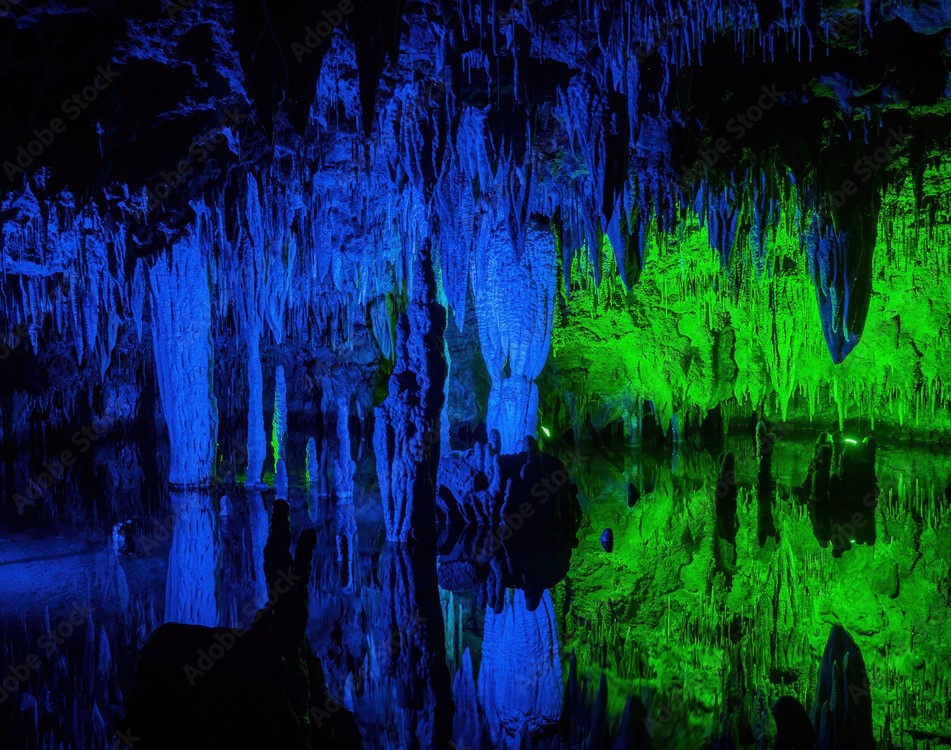
The spectacular formations inside caves (stalactites, stalagmites, flowstone, and more) are ongoing demonstrations of chemical precipitation and crystal growth. As water saturated with dissolved calcium carbonate drips into a cave, carbon dioxide escapes into the cave atmosphere, causing calcite to precipitate and slowly build these formations at rates typically measured in centuries.
These formations serve as natural archives, recording past climate conditions in their growth layers much like tree rings. Scientists can analyze cave formations to reconstruct temperature, precipitation, and atmospheric composition from thousands of years ago.
Bringing Cave Science Into the Classroom
Understanding caves and their unique atmospheres connects to multiple earth science concepts: the rock cycle, weathering and erosion, groundwater systems, atmospheric science, climate, and even practical applications in food science and engineering. At GSC, we provide tools that help educators bring these concepts to life.
Our rock and mineral collections include limestone, dolomite, and calcite specimens that are fundamental to understanding cave formation. Students can examine the same materials that make up cave walls and formations, observing crystal structure, testing hardness, and investigating how these rocks interact with weak acids.
Collections like our Rock and Mineral Collections provide hands-on materials for exploring the geology behind cave systems. Our Mineral Test Kit allows students to perform the same tests geologists use to identify cave minerals in the field.
The Rock Cycle Classroom Project helps students understand how the sedimentary rocks that host most caves fit into the broader cycle of rock formation, transformation, and breakdown that shapes Earth's crust.
Students can explore questions like: Why certain organisms or foods (like dairy) need specific temperature and humidity? How much energy does natural insulation save? What other products benefit from cave storage? These connections between earth science and everyday applications make learning memorable and relevant.
Missouri's Cave Legacy
In the Cave State, we have a special connection to these underground worlds. Missouri's caves have served as shelters, sources of saltpeter for gunpowder, natural cold storage, tourist attractions, scientific research sites, and now modern industrial facilities. They continue to reveal secrets about our planet's past and present while supporting contemporary commerce.
Whether your students will ever explore a real cave or not, understanding these unique environments builds scientific literacy about geology, atmospheric science, hydrology, and the interconnected systems that make Earth dynamic and fascinating.
From our home here in the Ozarks to classrooms across the country, we're committed to providing the tools and materials that make earth science tangible, engaging, and memorable. Because sometimes you need to "show me" to truly understand, and there's no better way to learn about our planet than through hands-on investigation of the rocks, minerals, and processes that shape it.