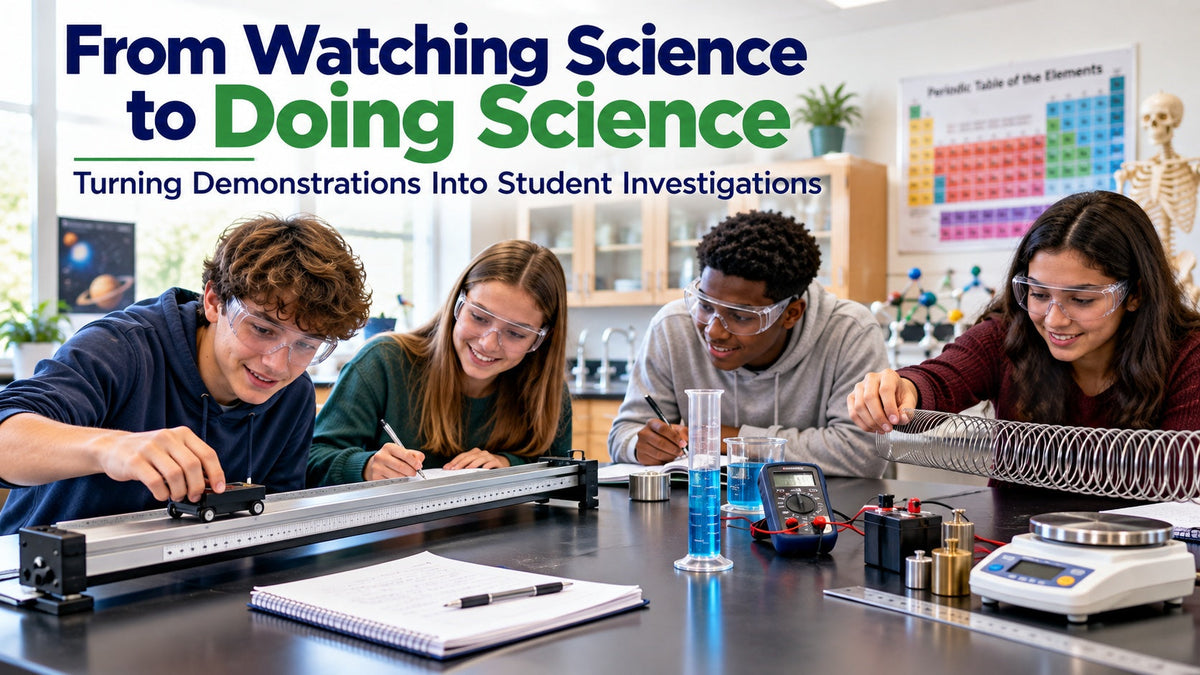
From Watching Science to Doing Science: Turning Demonstrations Into Student Investigations
A good science demonstration can capture attention in seconds.
A magnet moves an object without touching it. A wave travels across a spring. A liquid changes color. A cart accelerates down a track. Students see something happen, and suddenly the science concept in front of them feels much more real.
But there is an important question for science teachers and departments to consider:
Are students only watching the science happen, or are they getting opportunities to investigate it themselves?
Demonstrations have an important place in middle and high school science classrooms. They can introduce a phenomenon, make an abstract idea visible, save time, and allow teachers to show something that may not be practical for every student group to perform.
The strongest science programs, however, do not stop with observation.
Whenever possible, they turn “Look what happens” into “What can we find out?”
That shift can transform a memorable demonstration into a meaningful investigation.
Demonstrations Are a Starting Point, Not Always the Finish Line
There are many good reasons to use demonstrations.
A teacher may only have one piece of specialized equipment. The setup may require closer supervision. A phenomenon may happen too quickly for multiple groups to reproduce easily. Sometimes a demonstration is simply the most efficient way to introduce a concept.
The problem is not the demonstration itself.
The missed opportunity comes when students see the result but never get the chance to question it, measure it, test a variable, collect evidence, or explain why it happened.
Consider a demonstration involving a pendulum.
Students can watch the pendulum swing and discuss periodic motion. That has value.
But what happens if the next question becomes:
What determines the period of the pendulum?
Now students have something to investigate.
They can change the length of the pendulum, measure the time for repeated swings, compare trials, organize their results, and determine whether the evidence supports their predictions.
The same equipment that first created interest now becomes a tool for scientific reasoning.
Start With a Question Students Can Investigate
One of the easiest ways to turn a demonstration into an investigation is to change the lesson from a statement into a question.
Instead of:
“Today we are going to see how friction affects motion.”
Try:
“How will changing the surface affect how far an object travels?”
Instead of:
“Watch what happens when the magnetic field changes.”
Try:
“What variables might change the strength or effect of the magnetic field?”
Instead of:
“This demonstration shows how waves behave.”
Try:
“How does changing one condition affect the wave we observe?”
A good investigation question gives students a reason to collect information.
It should also be narrow enough that students can realistically test it with the equipment, time, and space available.
Teachers do not need to turn every demonstration into an open-ended research project. Even a short investigation can give students experience making predictions, controlling variables, measuring results, and using evidence.
Identify One Variable Students Can Change
A demonstration often becomes an investigation as soon as students are allowed to manipulate one meaningful variable.
For a motion investigation, students might change:
-
Ramp height
-
Surface material
-
Mass
-
Distance
-
Applied force
For an electricity investigation, they might change:
-
Number of cells
-
Circuit arrangement
-
Resistance
-
Wire length
-
Number of components
For a wave investigation, they might change:
-
Frequency
-
Tension
-
Length
-
Amplitude
-
Medium
For a properties-of-matter investigation, students might compare:
-
Mass
-
Volume
-
Density
-
Temperature
-
Material type
The important point is not to create as many variables as possible.
In fact, too many changing variables can make an investigation less useful.
Students need to understand what they are changing, what they are measuring, and what should remain controlled.
That structure helps move the activity from experimentation for entertainment toward experimentation for evidence.
Give Students Something to Measure
Observation is an important part of science, but measurement gives students another level of evidence.
Ask what students can record numerically.
Could they measure time?
Distance?
Mass?
Volume?
Temperature?
Voltage?
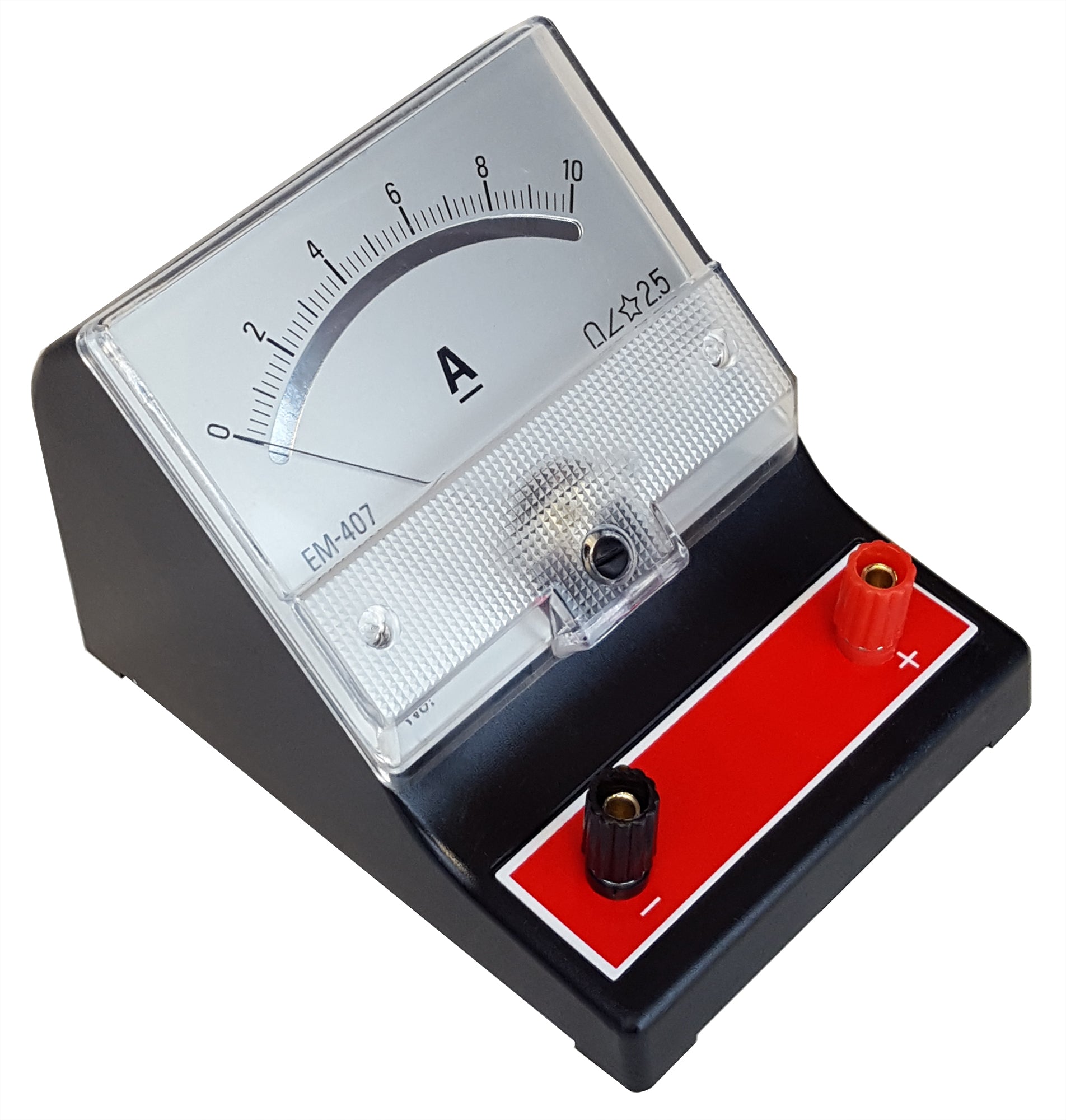
Current?
Angle?
Number of oscillations?
When students collect measurable data, the investigation can continue after the equipment is put away.
They can organize results into tables, calculate averages, create graphs, compare trials, identify patterns, and explain unexpected results.
This is one reason access to basic measuring equipment matters so much in a science program.
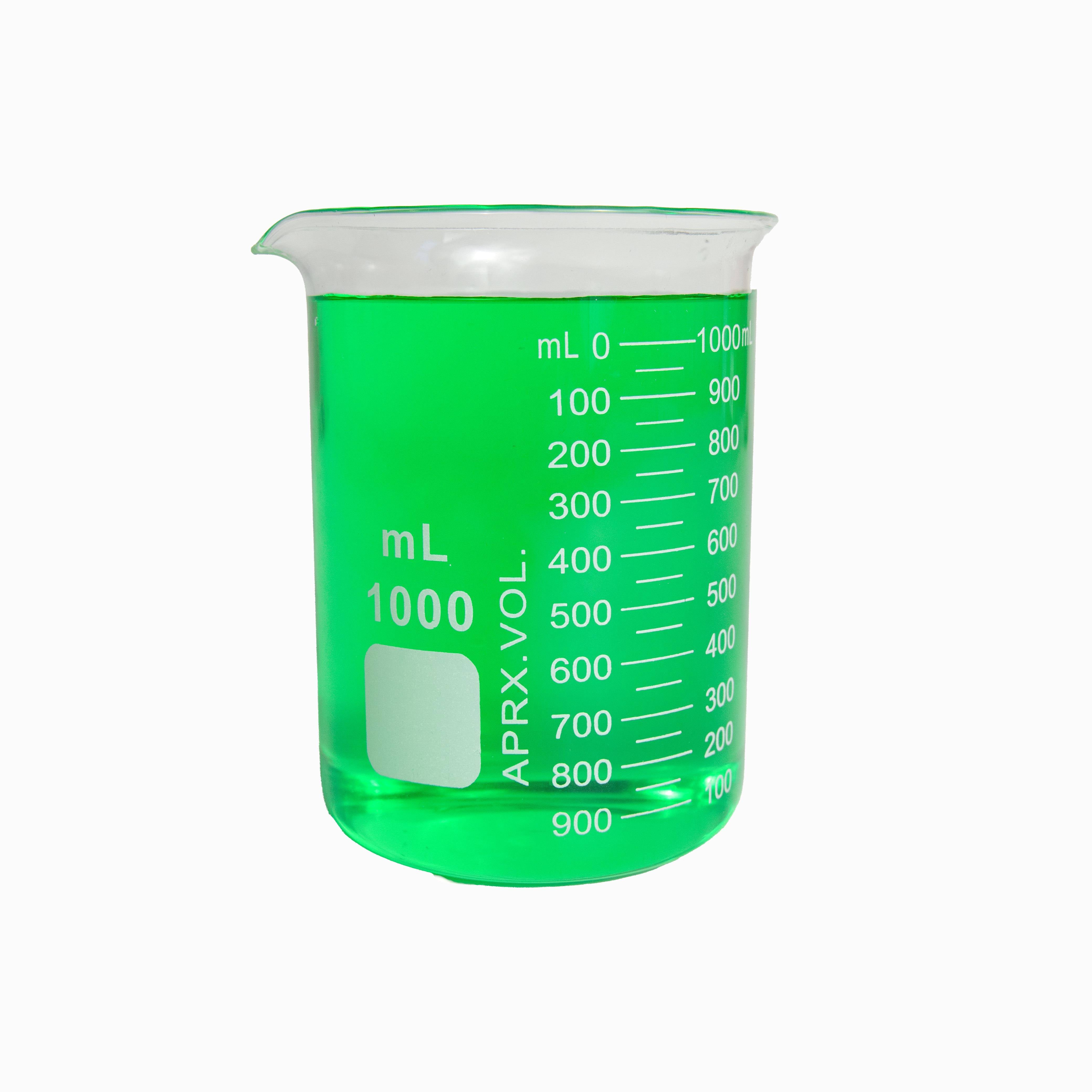
A stopwatch, balance, graduated cylinder, meter, thermometer, ruler, or other measuring instrument may look simple, but these tools allow students to turn observations into evidence.
Require More Than One Trial
One of the most useful changes teachers can make to an investigation is also one of the simplest:
Do it more than once.
Students often expect a science experiment to produce one perfect number.
Real measurements rarely work that way.
Two groups may record slightly different times. A measurement may vary from one trial to the next. An object may not travel exactly the same distance every time.
Those differences create valuable opportunities for discussion.
Students can ask:
Why did the trials differ?
Was the measurement technique consistent?
Was another variable changing?
Would additional trials increase confidence in the result?
Should the class calculate an average?
Does an unusual result represent a mistake, or is it information worth investigating?
Repeated trials help students see that scientific evidence is built from patterns, not from a single convenient result.
Let Students Make a Prediction Before They Know the Answer
A demonstration can easily become passive when students already know what they are supposed to see.
Prediction changes that.
Before the investigation begins, ask students what they think will happen and why.
For example:
If we double the length of the pendulum, what do you predict will happen to its period?
Which surface do you predict will create the greatest friction?
How will increasing the number of cells affect the circuit?
What do you think will happen to the wave when the tension changes?
The goal is not for every prediction to be correct.
The value comes from comparing the prediction with the evidence afterward.
That comparison gives teachers an opportunity to uncover misconceptions and gives students a reason to revise their thinking.
Science becomes less about being right before the investigation and more about explaining what the evidence shows.
Build Analysis Into the Activity
A hands-on activity is not automatically a strong investigation.
Students can follow every step of a procedure, collect several numbers, clean up their station, and still leave without thinking deeply about the result.
The analysis questions matter.
Instead of ending with:
“What happened?”
Ask:
What pattern do you see in the data?
Which evidence best supports your conclusion?
Which variable appears to have had the greatest effect?
Were your results consistent across trials?
What could explain differences between groups?
If you repeated the investigation, what would you change?
What additional measurement would make the conclusion stronger?
These questions help students connect the physical activity with the scientific concept.
The investigation is not finished when the experiment stops.
It is finished when students make sense of what happened.
Use the Same Equipment at Different Levels of Inquiry
Not every class is ready for the same level of independence.
The same demonstration equipment can often be used in several ways depending on the students' experience.
Level 1: Observe
The teacher performs the demonstration and students record observations.
Level 2: Measure
Students repeat the demonstration while collecting specified measurements.
Level 3: Compare
Students change one assigned variable and compare results.
Level 4: Plan
Students decide how to test a question using available equipment.
Level 5: Extend
Students develop a new question based on the first investigation and determine what additional evidence they need.
This progression can be especially useful for departments trying to build investigation skills across grade levels.
Students do not need to begin with completely open inquiry.
They can gradually take more responsibility for planning, measuring, analyzing, and explaining.
What This Looks Like Across Science Subjects
The demonstration-to-investigation approach can work throughout a middle or high school science program.
Physics
A teacher demonstrates motion on a ramp.
Students then investigate how changing ramp height affects travel time or distance. They collect repeated measurements, graph the results, and compare the observed pattern with their expectations.
Chemistry
A teacher demonstrates a temperature change during a process.
Students compare initial and final temperatures under controlled conditions, repeat trials, and analyze the pattern in the data.
Biology
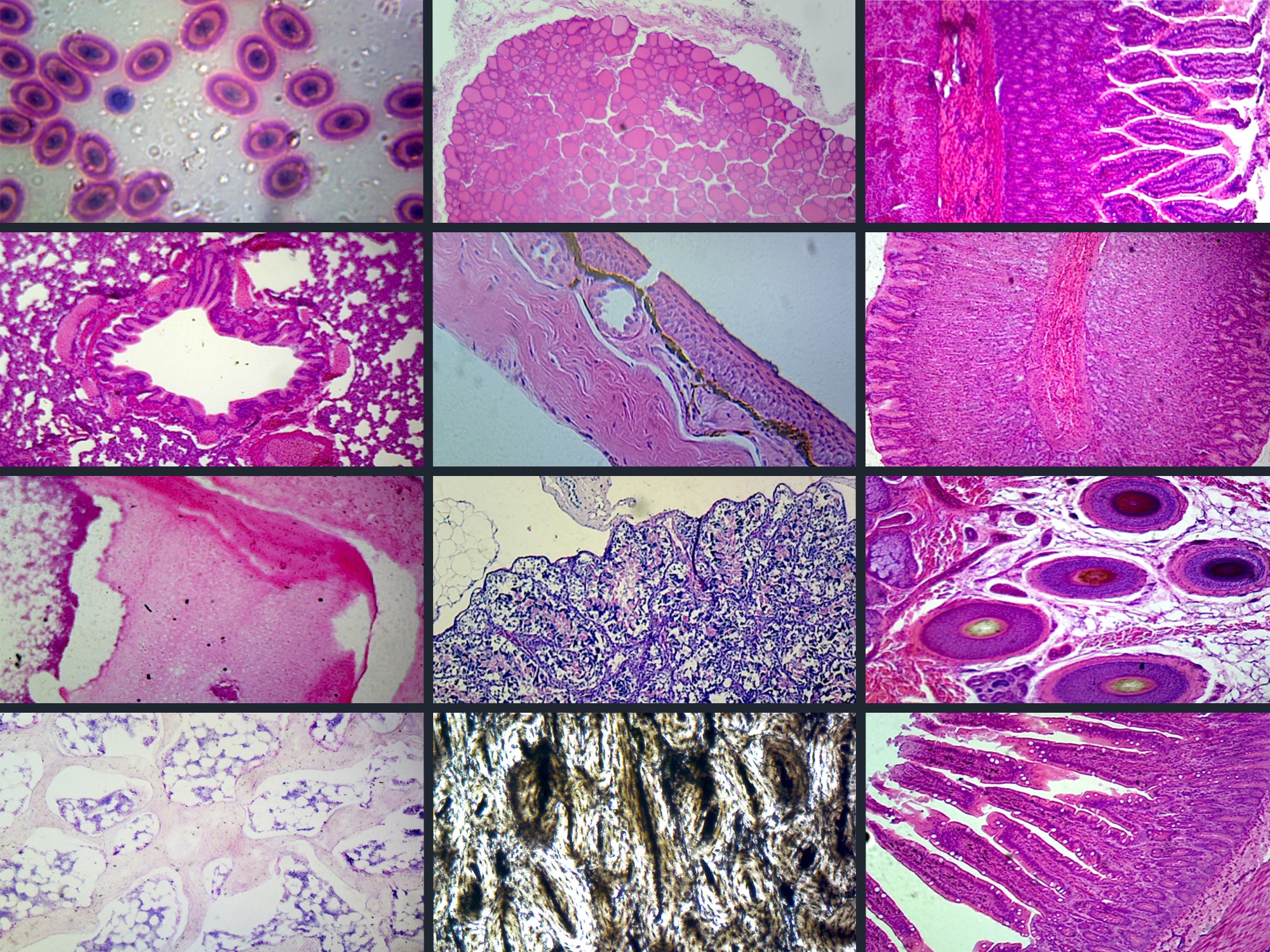
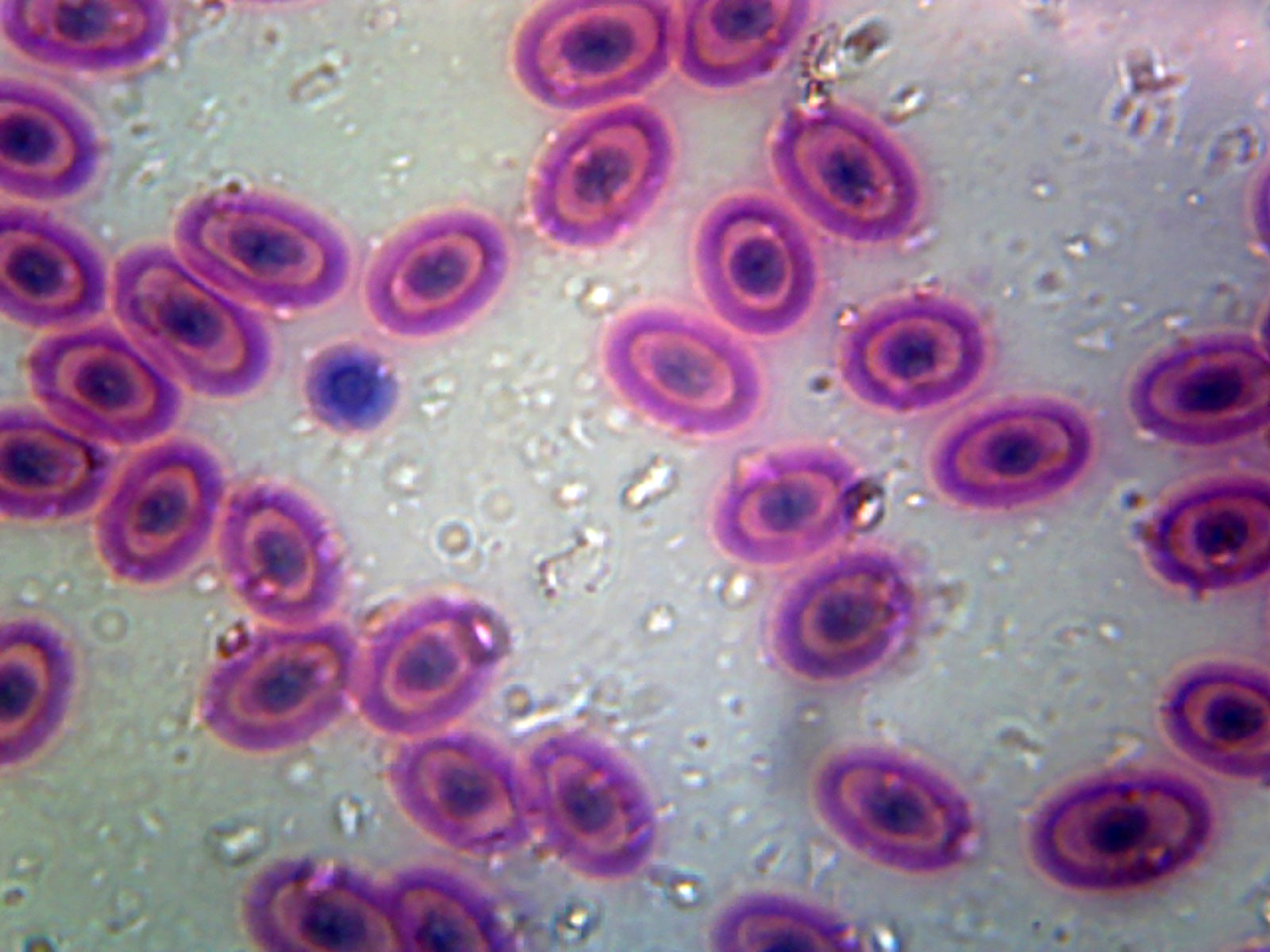
A teacher demonstrates microscopy techniques.
Students then compare prepared samples, record observations, identify similarities and differences, and develop an evidence-based explanation for what they observe.
Earth Science
A teacher demonstrates how water moves through different materials.
Students compare infiltration or runoff under different conditions, collect measurements, and discuss how the results relate to Earth processes.
Electricity and Magnetism
A teacher shows how a circuit or magnetic interaction behaves.
Students change one condition, collect measurements or observations, and determine how that variable affects the system.
In each case, the demonstration still has value.
It introduces the phenomenon.
The investigation gives students ownership of the evidence.
NGSS Connection: Students Should Be Doing the Science
This approach connects naturally with several NGSS Science and Engineering Practices.
Planning and Carrying Out Investigations asks students to move beyond observation and participate in the process of generating evidence.
Analyzing and Interpreting Data becomes relevant when students compare trials, organize measurements, identify patterns, and determine what the results mean.
Using Mathematics and Computational Thinking may be incorporated when students calculate averages, rates, relationships, or other quantities and represent their findings with graphs.
Constructing Explanations asks students to connect evidence from the investigation to the scientific ideas they are learning.
The exact Performance Expectation will depend on the science content being taught. The important point is that investigation skills should not be treated as an extra activity added after the curriculum. They can be part of how students learn the content itself.
What Science Departments Can Do
Moving toward more student investigation is not only a classroom-level decision.
Department chairs, science coordinators, and administrators can help by looking at whether teachers have the equipment, quantities, storage, preparation time, and instructional support needed to make investigations practical.
Useful department-level questions include:
-
Which demonstrations are already being used successfully?
-
Which of those could become small-group investigations?
-
What measurements would students need to collect?
-
Do classrooms have enough basic measuring equipment?
-
Which resources could be shared across courses?
-
Are there core investigations every student should experience?
-
Can common equipment be standardized across classrooms?
-
Are teachers avoiding investigations because of equipment limitations or preparation demands?
This type of review can reveal that strengthening hands-on science does not always require creating entirely new lessons.
Sometimes the opportunity is already sitting on a demonstration table.
The next step is simply giving students more access to it.
Equipment Should Support the Question
Science equipment is most valuable when it supports a clear instructional purpose.
A motion apparatus can help students collect evidence about force or acceleration.
Electrical equipment can allow students to compare circuit conditions.
Wave equipment can make changes in frequency, tension, or amplitude visible.
Balances, graduated glassware, thermometers, and other laboratory tools help students turn observations into measurements.
The goal is not to add more equipment simply for the sake of having it.
The goal is to give teachers the tools needed to move students from watching a phenomenon to investigating it.
From “Watch This” to “What Can We Find Out?”
Science demonstrations are powerful because they make ideas visible.
Student investigations are powerful because they make students responsible for the evidence.
The two approaches do not need to compete.
A demonstration can create curiosity, introduce a phenomenon, and establish a common experience for the class.
Then the teacher can take the next step.
Ask a question.
Change a variable.
Make a prediction.
Collect a measurement.
Repeat the trial.
Analyze the evidence.
Explain the result.
That is how a moment of “Watch this” can become something much more valuable:
“What can we find out?”
For teachers and science departments looking to strengthen hands-on instruction, that may be one of the most useful questions to ask.
Visit GoScienceCrazy.com to explore classroom and laboratory equipment designed to support hands-on science investigations across middle and high school science.