When we hear the word virus, we usually think of something that makes people sick. But humans aren't the only organisms viruses can infect.
Bacteria have viruses of their own—and there are an astonishing number of them.
Called bacteriophages, or simply phages, these microscopic viruses infect bacteria and use bacterial cells to reproduce. They are extraordinarily abundant in nature, and their strange appearance and unusual life cycle offer students a fascinating introduction to viruses, bacteria, genetics, evolution, and the microscopic ecosystems operating all around us.
A recent 1440 feature on bacteriophages highlights just how remarkable these tiny biological machines really are.
What Is a Bacteriophage?
The name gives us a clue.
"Bacteriophage" roughly means bacteria eater, although phages don't actually eat bacteria. Instead, they infect them.
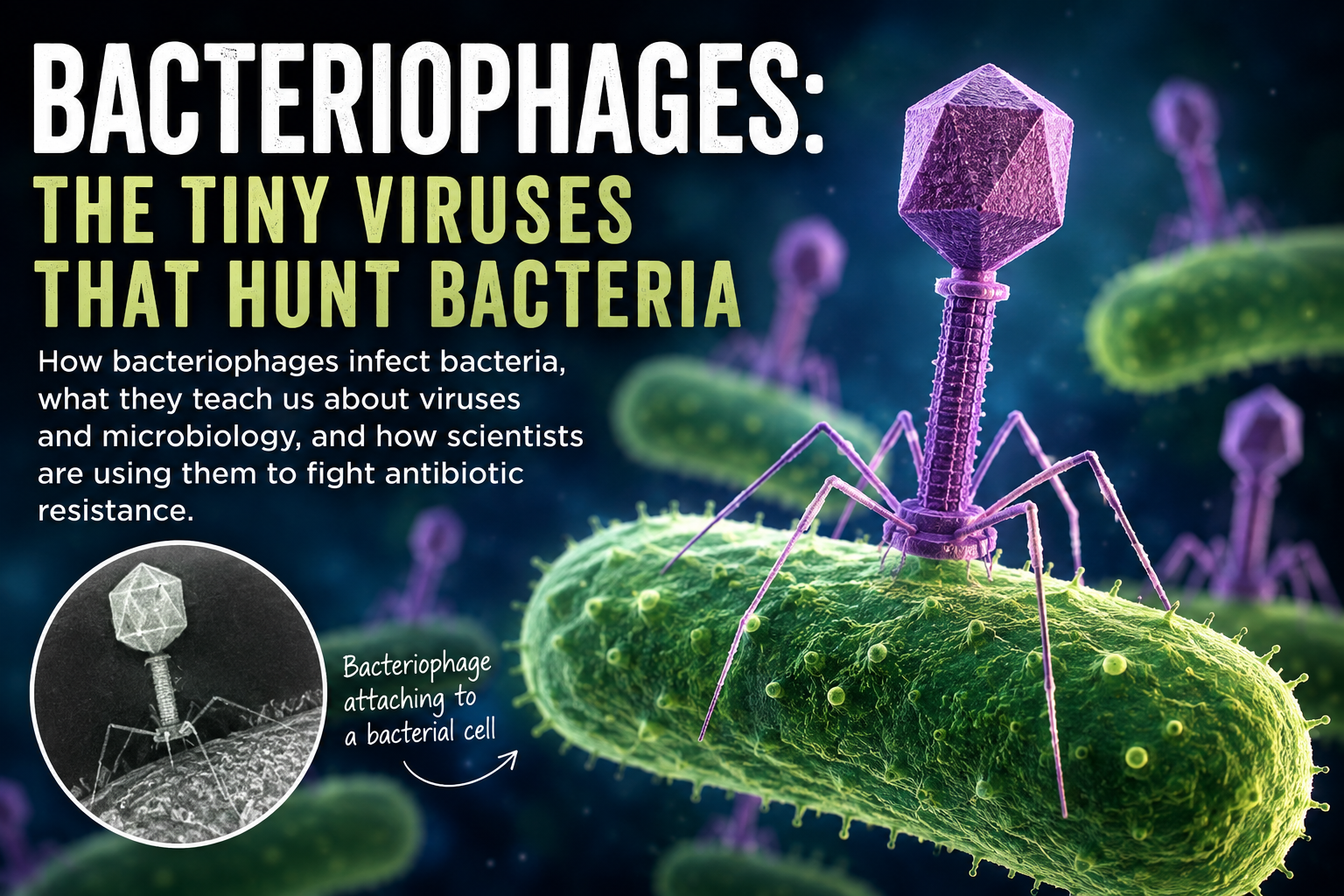
Many bacteriophages have one of the most recognizable shapes in microbiology. They can look almost like miniature spacecraft, with a geometric head sitting atop a narrow tail and leg-like fibers extending from the bottom.
A typical bacteriophage consists of a head, tail, and fibers that help it recognize and attach to a compatible bacterial cell.
The head of some phages has an icosahedral structure, a geometric shape with 20 triangular faces. Inside this protective structure is the virus's genetic material.
The tail functions somewhat like a microscopic delivery system. At its end, specialized fibers help the phage recognize and attach to an appropriate bacterial host.
Once the right bacterium has been found, the phage can deliver its genetic material into the bacterial cell.
And that's when things get particularly interesting.
Turning a Bacterium Into a Phage Factory
Viruses face an interesting biological problem: they cannot reproduce independently.
They need a host cell and its molecular machinery.
When a bacteriophage infects a susceptible bacterium, it can introduce its genetic material into the cell. That genetic information then redirects the bacterium's cellular processes.
Instead of simply carrying out its normal functions, the bacterium begins producing the components needed to make new phages.
Viral genetic material is copied. New phage heads and tails are produced. Eventually, the individual pieces are assembled into complete viruses inside the bacterial cell.
In the lytic cycle, enzymes including endolysins help break down the bacterial cell wall. Eventually, the cell ruptures—a process known as lysis—and the newly assembled bacteriophages are released into the surrounding environment.
Those new phages can then encounter and infect additional bacterial cells.
One microscopic infection has suddenly produced many more viruses.
For students, the process provides an excellent example of how genetic material carries biological instructions. It also demonstrates how one biological system can take advantage of the molecular machinery of another.
An Invisible Battle Happening Everywhere
Bacteriophages aren't biological oddities confined to laboratory dishes.
They're extraordinarily abundant throughout the environment.
Phages can be found anywhere bacteria live, including soil, freshwater, oceans, and microbial communities associated with our own bodies.
Their enormous numbers make the relationship between bacteria and bacteriophages an important part of Earth's microbial ecosystems.
The 1440 feature, drawing from a Kurzgesagt explainer, notes that bacteriophages may kill as much as 40% of the bacteria in Earth's oceans each day.
Think about the scale of that interaction.
An enormous microscopic struggle between bacteria and viruses is continually taking place throughout the world's oceans without us ever seeing it.
Those interactions can have consequences beyond individual bacteria. Microorganisms play important roles in nutrient cycles, food webs, decomposition, and other ecological processes. Something that changes microbial populations can therefore have effects that extend much further through an ecosystem.
Despite being so effective at destroying bacteria, bacteriophages generally aren't a threat to humans in the way human-infecting viruses are.
Phages tend to be highly specialized. A particular bacteriophage may infect only a specific type of bacterium or a closely related group of bacteria.
That specialization is also one reason scientists are so interested in them.
Could Viruses Help Us Fight Bacterial Infections?
For decades, antibiotics have been among medicine's most important tools for treating bacterial infections.
But bacteria evolve.
Within a bacterial population, genetic variation can give some individual bacteria traits that help them survive exposure to an antibiotic. Those survivors can reproduce and pass their advantageous traits to future generations.
Over time, this process of natural selection can contribute to populations of bacteria that are increasingly difficult to treat with existing antibiotics.
That leads to an important question:
What happens when antibiotics stop working against a dangerous bacterium?
Bacteriophages offer scientists another possible way of attacking harmful bacteria.
Because certain phages target particular bacteria, researchers can investigate whether those viruses could be used to attack the bacterium responsible for an infection.
This concept is known as phage therapy.
Instead of using a drug that may affect many different types of bacteria, the goal is to identify bacteriophages capable of infecting the specific harmful bacteria involved.
That doesn't mean phages are a simple replacement for antibiotics.
Matching an appropriate phage to a particular bacterial strain, understanding how bacteria may evolve resistance to phages, determining effective treatments, evaluating how the immune system responds, and ensuring safety all present scientific challenges.
But those challenges are precisely what make bacteriophages such an interesting topic for students.
They show science as an ongoing process rather than simply a collection of facts we already know.
Scientists observe a phenomenon, ask questions, develop hypotheses, conduct experiments, gather evidence, and determine whether something found in nature might eventually have a practical application.
A Great Example of Structure and Function
Bacteriophages also provide an excellent classroom example of one of biology's recurring ideas:
Structure relates to function.
Look closely at a typical bacteriophage and virtually every component has a job.
The head protects genetic material.
The tail fibers help recognize and attach to a suitable bacterial host.
The tail apparatus helps deliver genetic information.
The viral genome contains instructions capable of redirecting the host cell's machinery.
The phage's structure is closely connected to its ability to infect bacteria and reproduce.
That makes a bacteriophage a surprisingly useful model for asking students questions such as:
How does a virus recognize its target?
Why does shape matter at microscopic scales?
How can genetic information control cellular activity?
What happens when one biological system takes advantage of another?
Why might one virus infect a particular organism while another cannot?
And where should viruses fit into our definitions of living and nonliving things?
These questions connect a strange-looking microscopic virus to much broader ideas in cell biology, genetics, evolution, ecology, and medicine.
From Bacteriophages to CRISPR
There's another fascinating chapter in the relationship between bacteria and the viruses that attack them.
Bacteria aren't defenseless.
Some bacteria possess systems that allow them to retain genetic information associated with previous viral infections. If a similar virus attacks again, that stored information can help the bacterium recognize the threat.
This bacterial defense mechanism is connected to CRISPR-Cas systems.
Scientists studying these natural systems eventually learned how to adapt components of CRISPR into extraordinarily powerful tools for genetic research.
Consider the progression:
A virus attacks a bacterium.
The bacterium develops ways of defending itself.
Scientists investigate those defenses.
And that research ultimately contributes to technologies that allow researchers to manipulate genetic material.
It's difficult to find a better example of why studying basic biology matters.
We don't always know where scientific curiosity will lead.
From Bacteriophages to Biotechnology
The scientific importance of bacteriophages doesn't end with understanding bacteria and viruses. These tiny biological machines have also played an important role in modern biotechnology.
One particularly interesting example is phage display.
Phage display is a laboratory technique that uses bacteriophages to help scientists study interactions between proteins and other molecules.
American scientist George P. Smith pioneered the technique, demonstrating another way that scientists could turn the unusual biology of bacteriophages into a useful research tool.
His work eventually contributed to Smith receiving a share of the 2018 Nobel Prize in Chemistry.
It's another remarkable progression.
Scientists study viruses that infect bacteria. That research reveals unusual biological mechanisms. Those mechanisms become tools that scientists can use to investigate completely different biological questions.
Want to explore that connection further? Read our Explaining the Science Behind the 2018 Nobel Laureates article to learn more about George P. Smith, phage display, and the science recognized by the Nobel Prize.
Bringing the Microscopic World Into the Science Classroom
Students won't be able to watch individual bacteriophages attacking bacteria through a standard classroom light microscope.
Phages are simply too small.
But that limitation can actually become part of the lesson.
Ask students:
If something is too small to see directly, how can scientists know it exists?
That's a surprisingly powerful question.
It introduces students to scientific evidence, experimental design, scale, microscopy, and the limitations of scientific instruments.
Scientists frequently study phenomena that cannot be directly observed with our unaided senses. Instead, they develop instruments and experiments that allow them to collect evidence.
A classroom microscope provides an excellent opportunity to explore this idea.
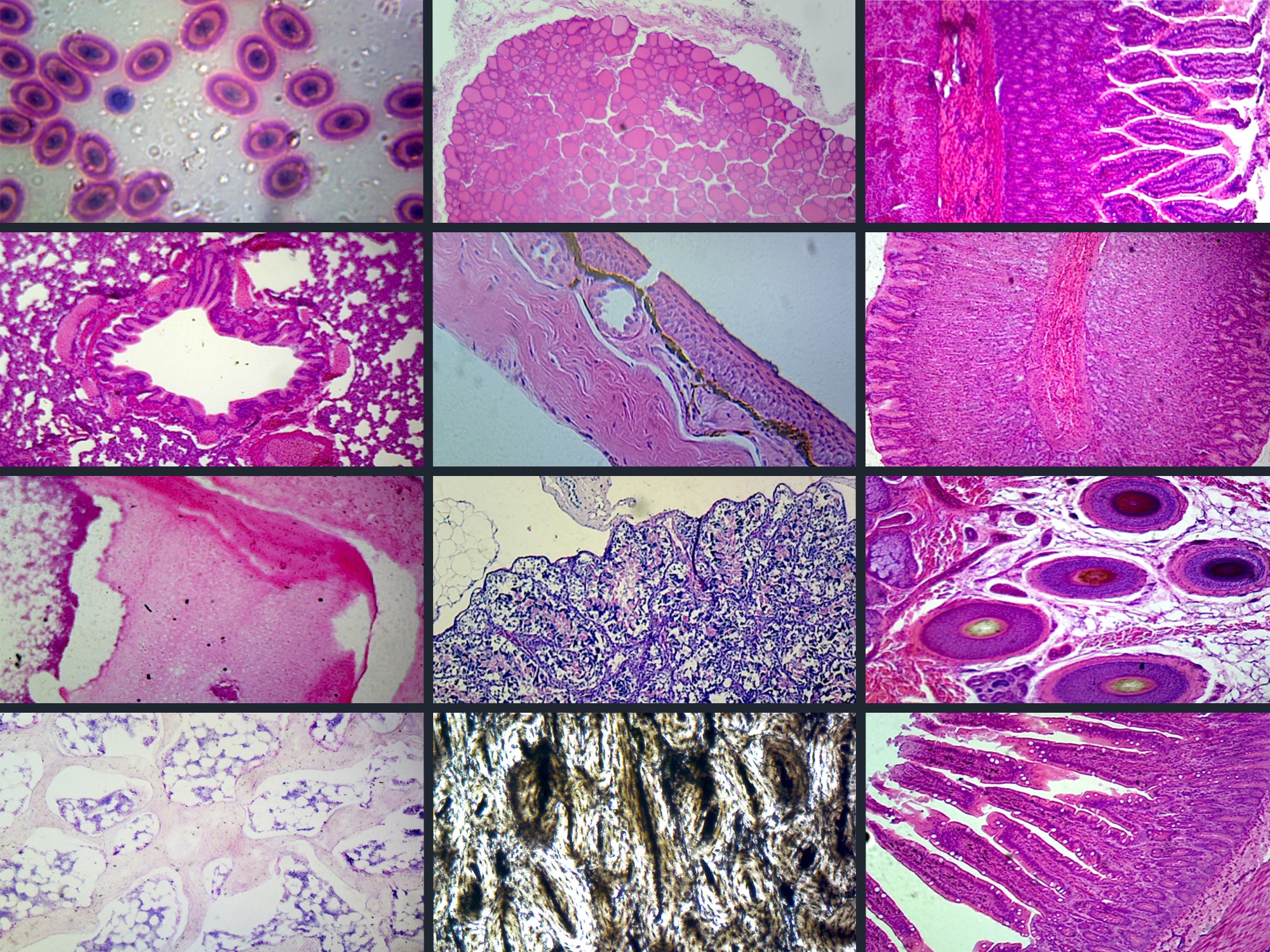
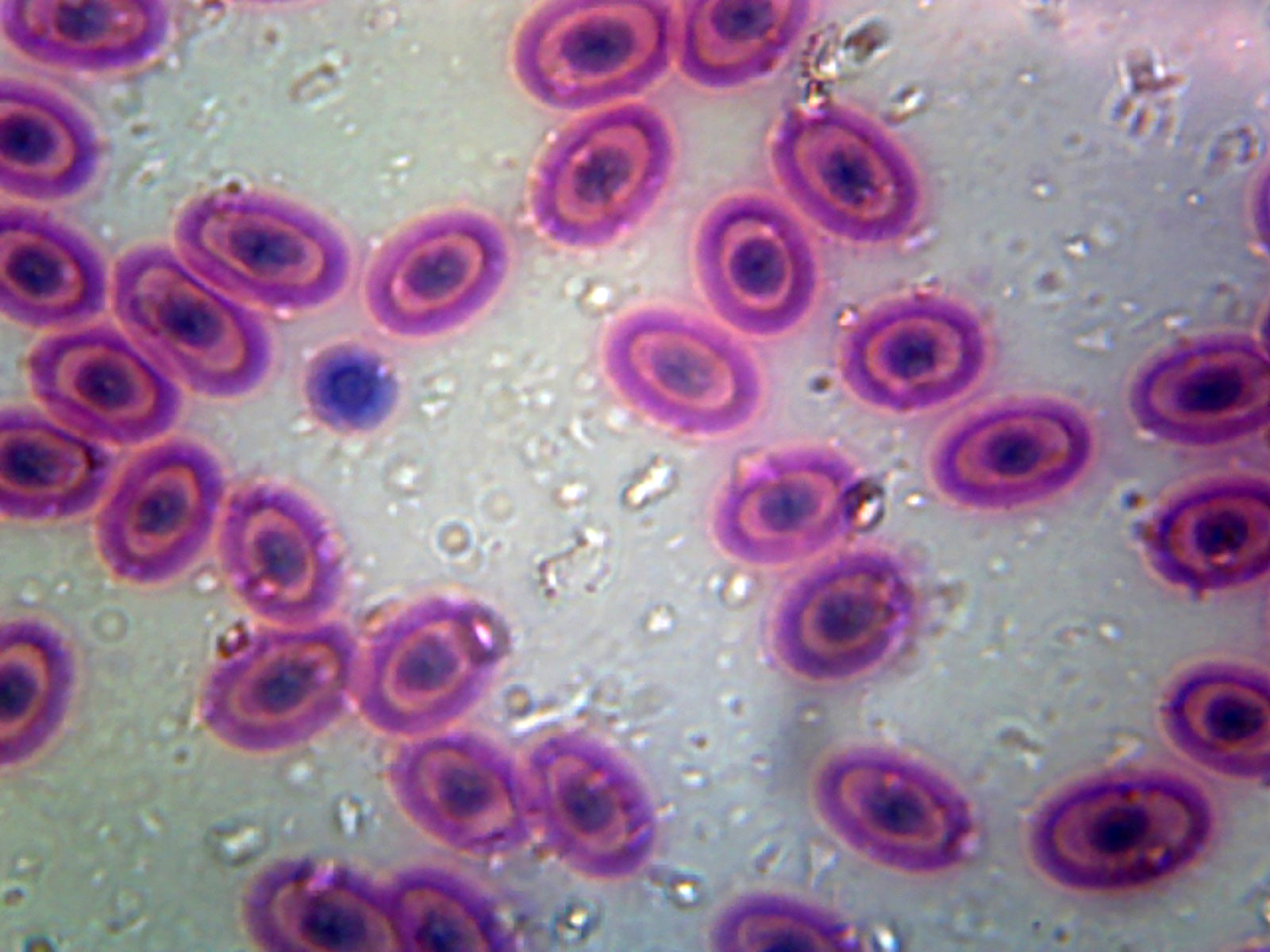
Students can use microscopes to observe the much larger microbial cells and biological structures that are accessible to classroom microscopy, then compare their observations with images of much smaller viruses produced using more advanced imaging technologies.
Go Science Crazy offers a collection of prepared microscope slides, including bacterial and other microbiology specimens that can help students connect an abstract discussion of microscopic organisms with actual laboratory observation.
Students might observe prepared bacterial specimens, compare different cell shapes and arrangements, practice focusing and magnification techniques, and then discuss the enormous difference in scale between the bacterial cells they are observing and the viruses capable of infecting them.
That turns a lesson about bacteriophages into a broader investigation of the microscopic world.
Try This Classroom Discussion
After introducing bacteriophages or watching the video below, have students observe prepared bacterial microscope slides.
Then ask them to compare what they can see through a light microscope with illustrations or electron microscope images of bacteriophages.
Consider questions such as:
-
Why can't we see bacteriophages with an ordinary classroom microscope?
-
How much smaller is a virus than a bacterial cell?
-
Which structures allow a bacteriophage to recognize and infect bacteria?
-
How does the phage life cycle demonstrate the relationship between structure and function?
-
Why are viruses dependent on host cells for reproduction?
-
How might bacteria evolve defenses against bacteriophages?
-
How might bacteriophages evolve in response?
-
Why might scientists investigate bacteriophages as an alternative or supplement to antibiotics?
The discussion can connect bacteriophages to cells, viruses, microorganisms, genetics, natural selection, microscopy, antibiotic resistance, biotechnology, and ecology within a single lesson.
Tiny Viruses, Big Scientific Questions
Perhaps the most fascinating thing about bacteriophages is how something so small can lead to such large scientific questions.
How do viruses evolve alongside their hosts?
How do bacteria develop defenses against viruses?
How do viruses overcome those defenses?
Could bacteriophages help us combat antibiotic-resistant bacteria?
How much do these microscopic interactions influence entire ecosystems?
And what other useful biological mechanisms are waiting to be discovered simply because scientists haven't investigated them yet?
Bacteriophages remind us that some of the most dramatic events in biology happen on scales we cannot see.
Every day, an unimaginably large microscopic battle is taking place between bacteria and the viruses that infect them.
Understanding that battle can teach students not only about viruses and bacteria, but also about genetics, evolution, ecosystems, biotechnology, medicine, and the process of scientific discovery.
And as researchers continue studying phages for applications such as combating antibiotic-resistant bacteria, they offer one more reminder that solutions to modern scientific problems can sometimes be found by investigating biological relationships that have been evolving in nature for billions of years.
Watch: The Deadliest Being on Planet Earth?
For a highly visual introduction to bacteriophages and how they attack bacteria, watch Kurzgesagt – In a Nutshell's:
The Deadliest Being on Planet Earth – The Bacteriophage
You can also explore the 1440 feature on bacteriophages that inspired this article.