Ask a middle schooler what biology is about and you'll likely hear some version of the same answer: cells, kingdoms, organelles, the food chain. Ask a high schooler and you might add DNA, photosynthesis, and maybe evolution. All correct answers, they're incomplete in ways that matter, and current biology research keeps revealing just how much more there is to teach.
The picture emerging from recent science is more complicated, more surprising, and frankly more interesting than the one most biology curricula present. Life is not a collection of isolated organisms following fixed genetic scripts. It is a web of relationships, tradeoffs, environmental pressures, and constantly revised understanding. Teaching biology as a list of facts to memorize misses what biology actually is: a way of seeing the living world.
Life Does Not Evolve Upward. It Adapts Sideways.
Evolution may be the most widely misunderstood concept in all of biology education. The misconception is almost universal: students picture evolution as a ladder, a march from simple to complex, from primitive to advanced, from worse to better. The image of a fish crawling onto land, becoming an amphibian, becoming a reptile, becoming a mammal, becoming a human is burned into the cultural imagination. It's also deeply misleading.
Evolution is not a ladder. It is a branching tree, and every branch tip represents an organism equally adapted to its current environment. There is no hierarchy. A bacterium that has persisted for three billion years is not less evolved than a human. It is exquisitely adapted to its niche. A fern is not a failed attempt at becoming a flowering plant. It is a successful fern. UC Berkeley's Understanding Evolution project explicitly warns that phylogenies are tree-like, not ladder-like, and that reading them as measures of "advancement" is a misconception.
A recent study on Galápagos giant daisies makes this concrete in a way that's genuinely teachable. Researchers found that leaf lobing, a specific physical trait, evolved repeatedly and independently across different island populations in response to different microclimates. The same trait emerged multiple times under similar environmental pressures, not along a single improving trajectory, but in parallel, shaped by local conditions. Evolution didn't move forward. It moved sideways, again and again, wherever the environment demanded it.
This is also a useful moment to expand students' evolutionary intuitions beyond animals. Plants are extraordinary subjects for teaching evolution precisely because students don't carry the same ladder-shaped assumptions about them. Leaf shape, root architecture, flowering timing, drought tolerance: these are all adaptive traits shaped by selection, and they're visible, measurable, and variable in ways that make classroom investigation possible.
NGSS connections here are direct: MS-LS4-4 and HS-LS4-2 both address natural selection and adaptation. The branching-tree framing also supports HS-LS4-1, which asks students to interpret evidence of common ancestry and diversity.
Classroom activity: Adaptation without hierarchy. Give students several different habitats, a shaded forest floor, a rocky coastline, a dry grassland, a pond edge, and ask them to predict which traits would be useful in each. Then show them real organisms from each habitat and ask: which one is most evolved? Use the moment of confusion that follows to dismantle the ladder and replace it with the branching tree. The question itself is the lesson.
The Most Important Life in an Ecosystem May Be Invisible.
Students learn about producers, consumers, and decomposers. They learn that bacteria cause strep throat and Salmonella. What they rarely learn is that microbial life is the foundation of virtually every ecosystem on Earth, that the human body hosts an enormous microbial community, and that the vast majority of microbial diversity has never been studied at all. The NIH Human Microbiome Project describes microbial communities in and on the body as central to health and disease, and recent work on extreme-environment microbes continues to show how much diversity remains unexplored.
For students who think of microbes primarily as pathogens, this is a perspective shift with real consequences. The microbes in soil make plant growth possible. The microbes in a termite's gut allow it to digest wood. The microbes in the human gut influence immune function, metabolism, and other aspects of health in ways researchers are still working to understand. Invisible life drives visible outcomes at every scale.
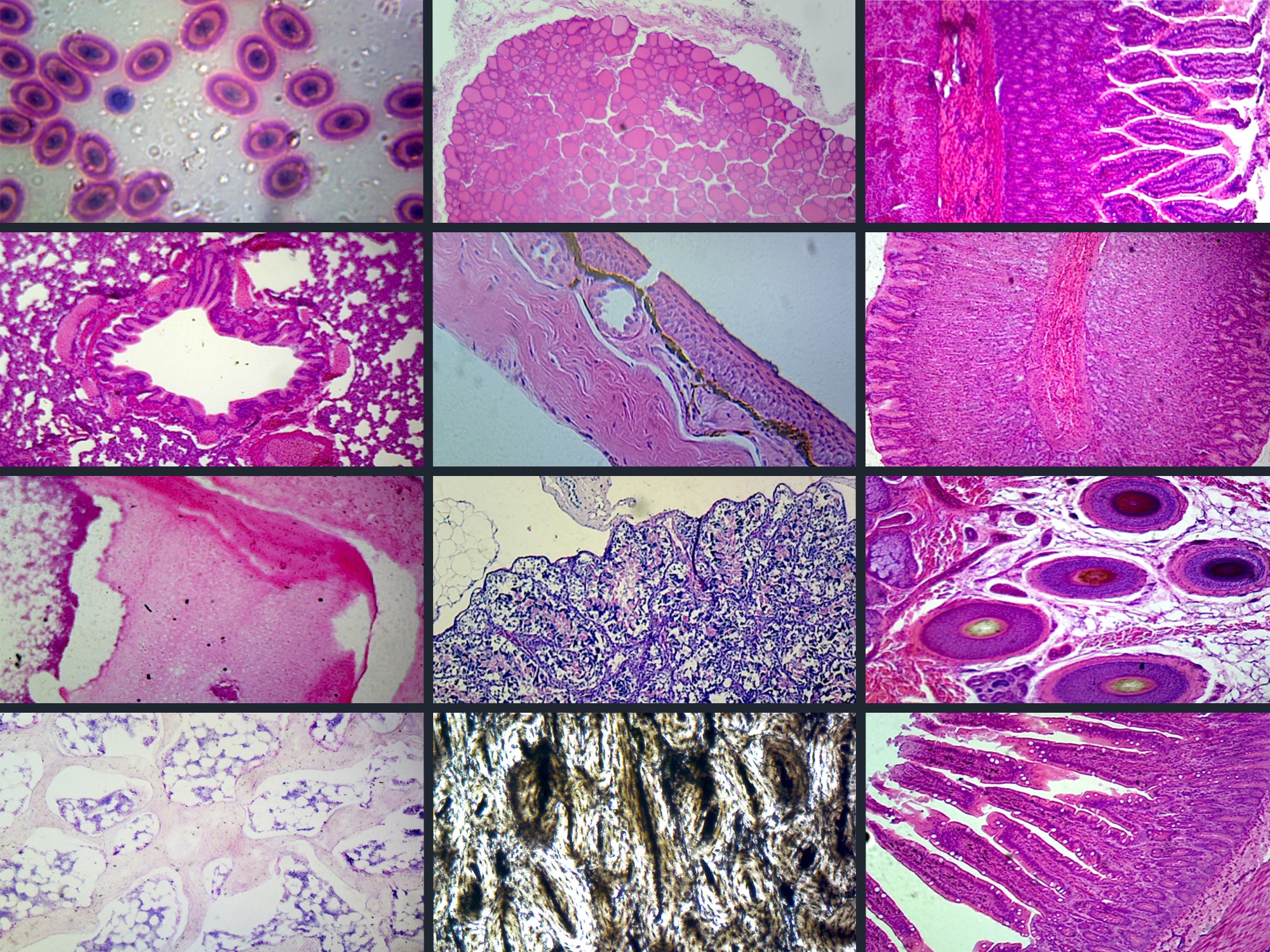
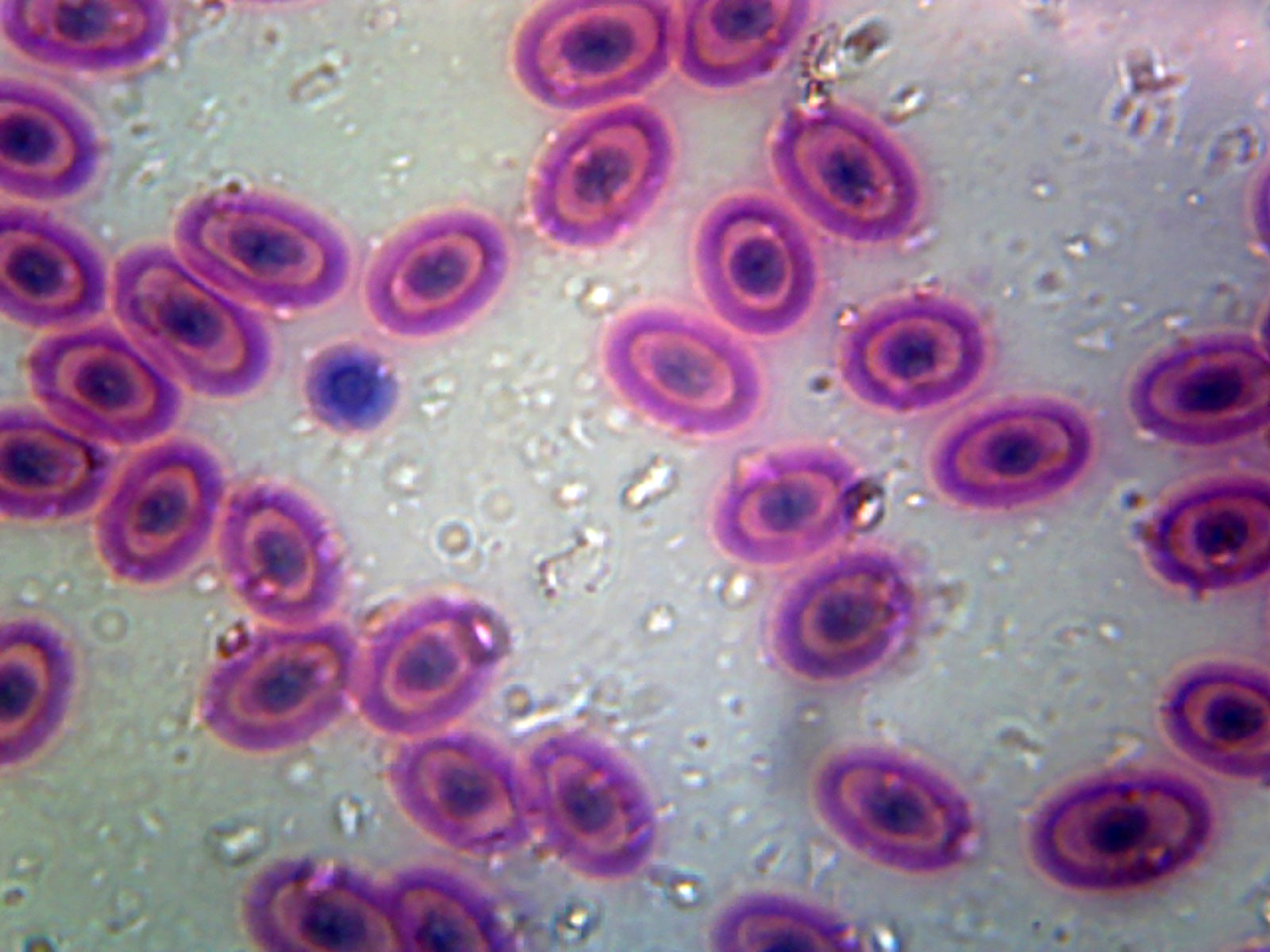
Microscope Slides and Cover Slips are the starting point for making this invisible world visible. Wet mounts from pond water, soil samples, or even a student's own skin reveal microbial life that textbook diagrams can only approximate. Watching a living microorganism move under magnification does something to a student's understanding of biology that no diagram can replicate. It makes the invisible real.
NGSS connections: MS-LS2-3 addresses ecosystem dynamics and the role of organisms in cycling matter. HS-LS2-6 asks students to evaluate claims about ecosystem stability and the role of biodiversity. The microbial angle enriches both.
Classroom activity: The unseen biology investigation. Have students identify a visible process in the classroom or outdoors that depends on unseen biology: decomposition of a leaf, fermentation in bread dough, the health of soil in a planter. Then work backward: what organisms are responsible? What would happen if they were removed? This moves students from organism-level thinking to systems-level thinking, and it makes microbes protagonists rather than footnotes.
DNA Is Not a Script. It Is Part of a Larger System.
The gene-as-destiny framing is one of the most persistent oversimplifications in biology education, and it has consequences that extend well beyond the classroom. When students believe genes determine traits in a simple, fixed way, they're poorly equipped to think about development, environment, epigenetics, or the actual complexity of inheritance. The National Institute of Environmental Health Sciences notes that most diseases and traits are not explained by genes alone, but by interactions between genes and environment.
The Galápagos daisy research is useful here again. The repeated evolution of leaf lobing across different island populations wasn't driven by a single gene switching on. It was tied to different regulatory pathways responding to local selection pressures. The same species, under different environmental conditions, expressed different developmental outcomes through different genetic mechanisms. That's not a simple gene-to-trait story. It's a gene-environment interaction story, which is what most biology actually is.
Traits emerge through interactions: between genes, between genes and environment, between an organism and its microbial partners, between developmental timing and external conditions. The same genotype can produce dramatically different phenotypes depending on when, where, and how an organism develops. Genes create possibilities. They don't write scripts.
NGSS standard HS-LS3-2 explicitly asks students to make and defend a claim based on evidence that inheritable genetic variations may result from new genetic combinations through meiosis, errors occurring during replication, or mutations caused by environmental factors, a standard that only makes sense if students understand genes as part of a larger system rather than fixed determinants.
A Dissection Kit is one of the most powerful tools available for making this systems reality tangible. When students open an organism and encounter a respiratory system, a digestive tract, and a circulatory network all occupying the same body, the gene-as-destiny story becomes immediately insufficient. A trait like "breathes air" isn't one thing. It's a trachea, muscle tissue, nervous system coordination, and structural anatomy working together. No single gene explains it. Dissection moves students from asking "what is this organism" to "how does this organism work," and that shift from classification to systems understanding is exactly what this misconception demands.
Classroom activity: Phenotype sorting under different conditions. Grow the same plant species under different light, water, or soil conditions and have students document the differences. Then ask: same genes, different traits. What does that tell us about the relationship between DNA and the organism we actually see? This is NGSS HS-LS3-2 in action, and it's more memorable than any Punnett square.
To Understand Life, Look at the Big Picture.
The organizing framework of most biology curricula is the individual organism. Students study the cell, then the tissue, then the organ, then the organism. Ecology gets a unit near the end of the year, often rushed, often reduced to food webs and biomes. The result is students who can describe a tree in impressive anatomical detail but who have no framework for understanding what happens to that tree during a multi-year drought, or how its health connects to the soil microbiome beneath it, or what its decline means for the species that depend on it.
A March 2026 study reported widespread declines in forest resilience following multi-year droughts, finding that both biodiversity loss and human pressure reduced the capacity of forest ecosystems to recover. The finding is a systems result: no single organism, no single variable explains it. The outcome emerges from interactions among species diversity, climate stress, and human land use, playing out over years and across landscapes.
This is the kind of biology that matters most right now, and it's the kind that's hardest to teach through organism-by-organism coverage. Systems thinking requires a different kind of classroom activity: one where students build maps of relationships rather than lists of parts, where they ask what connects rather than what is, where they look for feedback loops and delayed effects rather than simple cause-and-effect chains.
Our Magnifying Bug Viewer is a small tool with a large pedagogical application here. Insects are among the most visible entry points into ecosystem relationships: pollinators, decomposers, prey, indicators of environmental health. Close observation of a single insect, its body structure, its behavior, its habitat, opens into questions about what it eats, what eats it, what it pollinates, what its presence or absence signals about the health of a place. One organism, examined carefully, becomes a window into a system.
NGSS standard MS-LS2-4 asks students to construct an argument supported by empirical evidence that changes to physical or biological components of an ecosystem affect populations. HS-LS2-2 asks students to use mathematical representations to support and revise explanations based on evidence about factors affecting biodiversity and populations. Both standards require systems thinking, not organism-by-organism coverage.
Classroom activity: Systems map of a living thing. Choose one organism, a tree, a bee, a pond, a human. Have students map its environment, food sources, predators or competitors, microbial partners, human influences, and seasonal changes. Then ask: which part of this map would a textbook diagram leave out? Almost always, the answer is the microbes, the human influence, or the feedback loops. That gap is the lesson.
What Biology Should Help Students Notice:
These four myths share a common root: they all treat biology as simpler than it is. Evolution as a ladder is simpler than evolution as a branching tree. Microbes as germs is simpler than microbes as essential partners. Genes as destiny is simpler than genes as one part of a larger developmental system. Individual organisms are simpler than ecosystems.
Simpler is easier to teach and easier to test. But simplicity can often be a thief of truth, and students who leave biology class with the simplified version are less equipped to think about the living world they actually inhabit.
The goal of biology education, at its best, is not to cover the curriculum. It is to help students think biologically: to see relationships where others see isolated things, to ask what the evidence actually shows, to hold complexity without collapsing it into false certainty. Recent research keeps expanding what biology knows. The classroom can expand what students see.
What misconception shows up most often in your students' thinking? Which of these four ideas feels most urgent in your classroom? Where is the most important teaching is waiting to happen?
One More Activity Worth Trying
Which myth is hiding here? Give students four statements: evolution always makes organisms better; bacteria are bad for you; genes determine everything about a trait; ecosystems can be understood one species at a time. For each, have them identify the misconception, explain why it seems believable, and describe what biological evidence would test it. This works as an opening activity, a closing reflection, or an assessment.
If you're looking for tools to bring these investigations to life, our Biology collection includes microscope slides and cover slips for making microbial life visible, dissection kits for exploring biological systems firsthand, magnifying viewers for close observation of living organisms, and much more. The best biology teaching starts with students looking at something real.