Spooky Science, Serious Learning: Turning Halloween Curiosity Into Hands-On Investigation
Halloween has no shortage of things that make students curious.
Why do some materials glow in the dark? Why does a shadow change size? What makes an eerie sound seem louder in one place than another? How can an ordinary object suddenly appear to move, float, or disappear?
Behind many of the effects associated with Halloween are real scientific ideas involving light, sound, matter, energy, chemistry, motion, and the human body.
For science teachers, that creates an opportunity.
A seasonal theme can capture attention, but the goal does not have to be a Halloween activity simply for the sake of celebrating Halloween. The stronger approach is to use that curiosity as an entry point into meaningful science.
Instead of asking students only to watch a spooky effect, ask them to explain it.
Instead of giving them the answer, let them collect evidence.
Instead of treating the activity as a break from the curriculum, use the theme to strengthen the curriculum.
That is where Halloween science becomes more than entertainment.
Start With the Science, Then Add the Halloween Theme
The easiest way to keep a seasonal lesson academically useful is to begin with the learning objective.
Ask:
What science concept do students need to understand?
Then consider whether a Halloween-themed phenomenon can help students investigate it.
For example, a lesson about light could become an investigation involving shadows.
A lesson about waves could examine the physics behind eerie sounds.
A chemistry lesson could explore color change, reaction rate, or material properties.
A biology lesson could use the familiar image of a skeleton as a starting point for discussing structure, movement, and mechanical advantage.
The Halloween theme provides the hook.
The science provides the purpose.
This distinction matters because an activity can be fun without necessarily producing much learning. A well-designed seasonal investigation gives students something to observe, measure, compare, analyze, or explain.
Shadows Are Really an Optics Investigation
Halloween decorations rely heavily on shadows, silhouettes, projected images, and unusual lighting.
That makes the season a natural opportunity to explore light.
Students can investigate questions such as:
What happens to a shadow when the object moves closer to the light source?
How does the distance between the object, light source, and screen affect shadow size?
Which materials transmit, absorb, or block light?
How does the angle of the light affect the shape of the shadow?
A teacher might begin by creating a large, dramatic shadow on the wall.
Instead of immediately explaining why it changed size, students can make predictions.
Then they can move the object to different positions and record what happens.
For a more quantitative investigation, students can measure:
-
Distance from the light source
-
Distance from the screen
-
Object height
-
Shadow height
-
Angle of illumination
Students can organize the measurements into a table, look for patterns, and determine which variables have the strongest effect.
What began as a spooky shadow now becomes an investigation into how light travels and interacts with objects.
What Makes a Sound Feel Spooky?
Sound is another part of Halloween that has a strong scientific foundation.
Creaking doors, howling wind, low-frequency tones, echoes, rattling objects, and resonating containers can all lead into discussions of vibration and waves.
A useful classroom question might be:
Why do some objects make louder or deeper sounds than others?
Students could investigate how sound changes when they alter:
-
Length
-
Tension
-
Material
-
Amount of air in a container
-
Size of a resonating chamber
-
Frequency of vibration
Instead of simply producing a strange sound, students can compare several conditions.
They might record which setup produces the highest or lowest pitch, which produces the greatest perceived volume, or how changing one variable affects the sound.
A tuning fork, wave spring, vibrating string, resonance tube, or other sound demonstration equipment can turn a Halloween sound effect into a physics lesson.
The goal is not just to create the sound.
The goal is to explain why the sound changes.
Glowing Objects Offer a Lesson in Energy
Glow-in-the-dark materials are another easy Halloween connection.
Students may be familiar with glowing decorations, stars, stickers, or safety markings, but they may not have considered why some materials continue to emit light after the original light source is removed.
That question can lead to a discussion of energy absorption and emission.
Teachers can ask students to compare how different conditions affect the brightness or duration of a glow.
Possible variables might include:
-
Length of exposure to light
-
Type of light source
-
Distance from the light source
-
Temperature
-
Material
Students can make a prediction, expose the material under controlled conditions, and compare what they observe afterward.
Even if students are making mostly qualitative observations, the activity can still reinforce an important habit:
Change one variable at a time.
That single practice helps students understand why experimental controls matter.
Skeletons Can Become a Physics Lesson
Skeletons are everywhere during Halloween.
They also provide an opportunity to connect biology with physics.
Rather than using a skeleton only to identify bones, teachers can ask students to consider how bones and joints work together to produce movement.
A simple question such as:
Why does the location of a joint matter when lifting or moving something?
can lead into a discussion of levers and mechanical advantage.
Students can model limbs using simple materials and experiment with changing:
-
Fulcrum position
-
Load position
-
Applied force
-
Lever length
Students might predict which arrangement will require the least force and then test their ideas.
This creates a natural connection between anatomy, structure, forces, and engineering.
It also shows students that science disciplines do not exist in isolation.
Biology can involve physics.
Chemistry can involve mathematics.
Earth science can involve engineering.
Hands-on science often makes those connections easier to see.
Halloween Chemistry Should Still Produce Evidence
Color changes, bubbling mixtures, temperature changes, and unusual materials can easily become part of a Halloween chemistry lesson.
But simply producing a dramatic reaction does not necessarily make it a strong investigation.
The better question is:
What can students measure or compare?
Instead of asking students only to observe a reaction, consider whether they can compare:
-
Temperature before and after
-
Reaction time
-
Mass
-
Volume
-
pH
-
Concentration
-
Amount of gas produced
-
Changes under different conditions
For example, if two conditions appear to produce different reaction rates, students can record the time required for a visible change to occur and compare multiple trials.
The Halloween theme may attract attention, but the measurement makes the activity scientifically useful.
Turn the Surprise Into a Question
Halloween science often works well because students do not immediately know what is going to happen.
Teachers can use that uncertainty.
Before showing the result, ask students to predict it.
Then ask them to explain the reasoning behind their prediction.
After the demonstration or investigation, return to the original ideas.
Were they correct?
What evidence changed their thinking?
What explanation now makes the most sense?
This process is much more valuable than trying to make sure every student predicts correctly.
Science depends on being willing to revise an explanation when the evidence points in another direction.
A surprising Halloween phenomenon can make that process especially memorable.
Move From Observation to Measurement
Seasonal demonstrations frequently begin with something visually interesting.
That is useful, but teachers can often strengthen the lesson by adding one measurement.
If something moves, measure distance or time.
If something changes temperature, measure the temperature.
If something changes size, measure it.
If light is involved, compare distance or angle.
If sound changes, compare frequency, length, tension, or another relevant variable.
If a chemical process changes, measure time, temperature, mass, volume, or pH when appropriate.
Measurement turns:
“That was interesting.”
into:
“Here is the evidence.”
That shift is at the heart of hands-on science.
Give Students More Than One Trial
A Halloween investigation can also be a useful opportunity to reinforce repeated trials.
Students sometimes expect every experiment to produce exactly the same result.
Real classroom data rarely behaves that way.
If three groups obtain slightly different measurements, that is not necessarily a problem.
It is an opportunity to ask:
What caused the differences?
Were all groups using the same technique?
Was one variable difficult to control?
Would more trials help?
Should students calculate an average?
How confident are they in their conclusion?
Those conversations help students understand that scientific investigation involves evaluating the quality of evidence, not simply obtaining a number.
Keep the Science in the Center
Seasonal activities can easily become more elaborate than they need to be.
Decorations, costumes, dramatic names, and themed materials can make an activity memorable, but they should not overwhelm the investigation itself.
A useful test is to ask:
If the Halloween theme were removed, would this still be a worthwhile science lesson?
If the answer is yes, the theme is probably supporting the instruction rather than replacing it.
For example, an investigation of shadow size is still an optics investigation.
A study of sound frequency is still wave science.
A lever model based on a skeleton is still an investigation of force and mechanical advantage.
A glowing-material investigation is still about energy and material properties.
The seasonal connection simply gives students another reason to become curious.
NGSS Science and Engineering Practices Fit Naturally
Halloween investigations can support several Science and Engineering Practices when the activities are structured around questions and evidence.
Asking Questions and Defining Problems
Students begin by identifying something they want to explain or test.
Why did the shadow change?
Why did the pitch change?
Why did one material glow longer?
Planning and Carrying Out Investigations
Students identify variables, determine what they will measure, and collect observations or data.
Analyzing and Interpreting Data
Students compare trials, identify patterns, organize results, and determine what their evidence suggests.
Using Mathematics and Computational Thinking
Students may calculate averages, rates, ratios, distances, or other values and use graphs to represent results.
Constructing Explanations
Students use the evidence they collected to explain the phenomenon.
The specific NGSS Performance Expectation will depend on the science topic and grade level being taught. The important point is that a seasonal activity can still reinforce the same scientific practices students should use throughout the year.
A Halloween Investigation Does Not Need Expensive Equipment
One of the advantages of seasonal science is that many investigations can be built around equipment teachers already use.
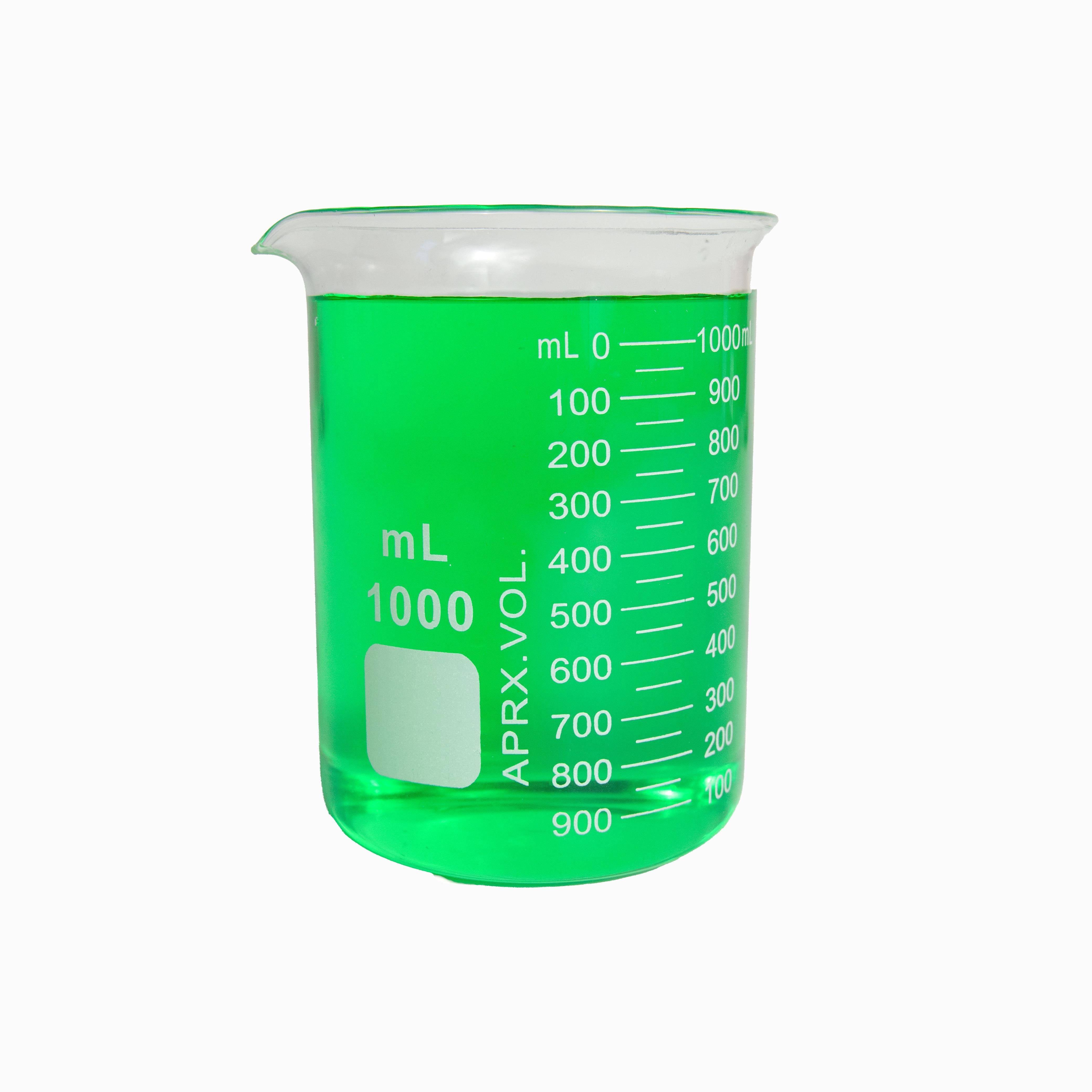
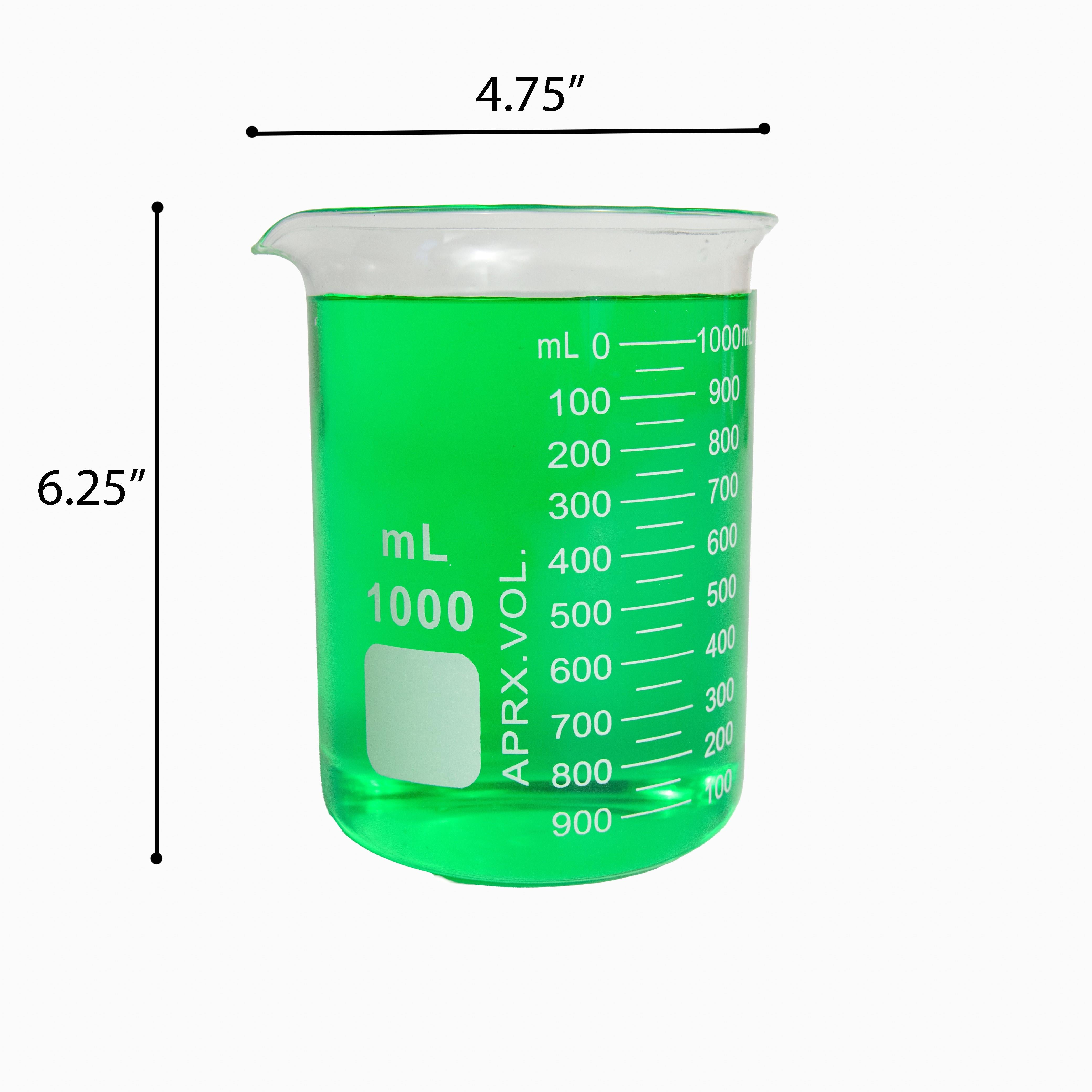
Light sources, rulers, thermometers, balances, graduated cylinders, wave equipment, sound equipment, laboratory glassware, support stands, and basic measuring tools can all be used to explore Halloween-themed questions.
The goal is not to purchase equipment for one October activity.
For departments and administrators, a better approach is to prioritize equipment that supports multiple investigations throughout the year.
A good piece of science equipment might appear in a Halloween investigation this month, a mechanics lesson later in the semester, and a student-designed investigation in the spring.
That repeated instructional value is worth considering when science departments plan budgets and equipment purchases.
Department Leaders Can Use Seasonal Lessons as a Planning Opportunity
Halloween science can also reveal something about a department's overall laboratory readiness.
If a teacher develops a strong investigation but cannot run it because there are not enough measuring instruments for student groups, that identifies a resource need.
If several teachers are building similar activities but using different equipment, there may be an opportunity to standardize commonly used materials.
If one piece of equipment can support physics, chemistry, and general science courses, it may make sense as a shared department resource.
Seasonal lessons can therefore do more than increase engagement.
They can help departments identify which classroom resources are being used most effectively and where equipment access might be limiting instruction.
Make Halloween a Gateway to Better Questions
The best Halloween science lesson does not need the biggest reaction, the strangest material, or the most dramatic decoration.
It needs a good question.
Why did that happen?
What variable caused the change?
How could we measure it?
Would the result happen again?
What evidence supports our explanation?
What would happen if we changed one condition?
Those questions turn curiosity into investigation.
And that is the real opportunity Halloween provides science teachers.
The season already gives students plenty of strange sights, unusual sounds, glowing objects, skeletons, shadows, and unexpected effects.
Science gives them the tools to figure out why they happen.
At Go Science Crazy, we believe some of the most memorable science lessons begin when students stop simply watching a phenomenon and start asking questions about it.
This Halloween, use the spooky part to capture their attention.
Then let the science take over.