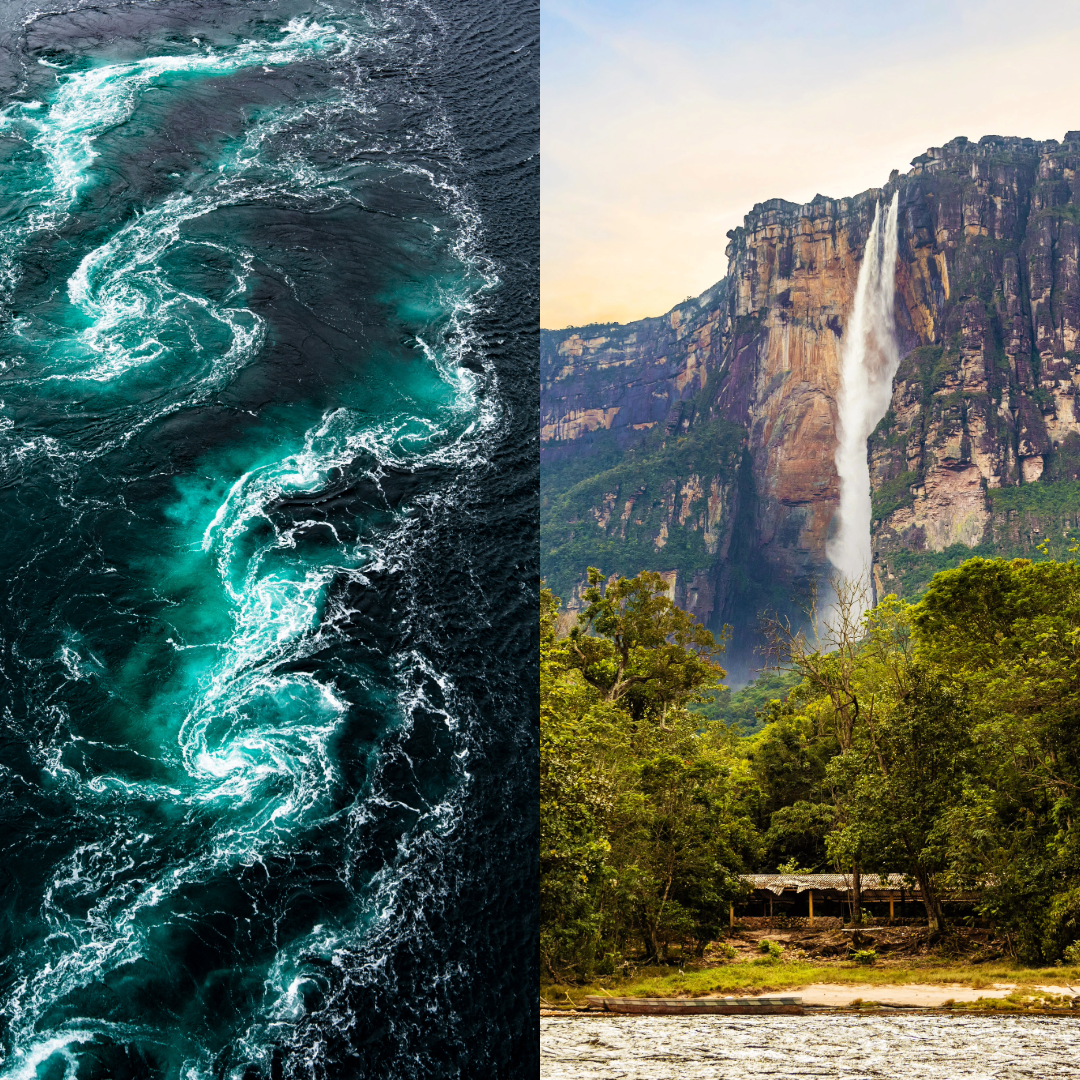
If you Google "world's largest waterfall," you might land on Angel Falls. But if you scroll farther, you'll find there is a drop more than three times the height of the Venezuelan mammoth. It lies beneath the Strait of Denmark and drops roughly 11,500 feet, moving an estimated 175 million cubic feet of water every second. You will never see it, photograph it, or stand anywhere near it. It exists entirely beneath the surface of the North Atlantic, and the force driving it is the same principle you can observe on a lab bench. Liquid convection.
NOAA describes the Denmark Strait cataract as the largest waterfall on Earth by volume, and the mechanism behind it is straightforward once you understand what cold water does when it meets warm water.
What Is Liquid Convection?
Convection is the movement of a fluid driven by differences in density. In liquids, density is closely tied to temperature. Cold water is denser than warm water, which means it sinks. Warm water is less dense, which means it rises. When these two conditions exist in the same body of liquid, the result is a continuous circulation: warm fluid rises, cools, becomes denser, sinks, warms again at the bottom, and rises once more. This cycle is a convection current.
What Is Happening at the Denmark Strait?
The Denmark Strait sits between two very different bodies of water. On one side, the cold, dense water of the Nordic Seas sits at depths near the ocean floor. On the other side, the relatively warmer, less dense water of the Atlantic Ocean sits higher in the water column. When these two water masses meet at the sill, the shallow underwater ridge that separates them, the cold Nordic water spills over the edge and plunges downward along the ocean floor.
This is the cataract. It's not a dramatic visual event. There is no roaring edge, no mist, no visible drop. It's just cold, dense water doing what physics requires: sinking beneath warmer, lighter water and flowing along the bottom of the ocean basin. The scale is almost impossible to hold in the mind. The flow rate is roughly 2,000 times that of the Amazon River.
The process does not stop there. As that cold water sinks and spreads southward along the ocean floor, warmer surface water from the Atlantic moves northward to replace it. This exchange is part of the global thermohaline circulation, sometimes called the ocean conveyor belt, a planet-scale convection system that distributes heat around the Earth and plays a significant role in regulating climate.
Where Else Does Liquid Convection Show Up?
The Denmark Strait is an extreme example, but liquid convection is happening constantly at scales both enormous and ordinary.
In the Earth's mantle, molten rock moves through convection currents that drive the movement of tectonic plates over millions of years. The same principle that moves ocean water moves the ground beneath our feet, just far more slowly.
In a pot of water on a stove, convection is visible if you watch carefully before the water reaches a full boil. Water near the bottom (closest to the heat source) warms, rises, cools near the surface, and sinks back down.
The human body relies on convection too. Blood warmed by metabolic activity in the core circulates outward, carrying heat to the extremities and returning cooler blood back to be rewarmed. The circulatory system is, among other things, a convection loop.
Even a simple lava lamp operates on convection. The wax at the bottom is heated until it becomes less dense than the surrounding liquid, rises, cools near the top, becomes denser again, and sinks. The cycle repeats as long as the heat source remains.
Seeing It for Yourself
The Liquid Convection Square makes this process directly observable at lab scale. Fill the glass square with water and apply gentle heat to one side. After a few moments, depending on the intensity of heat you're using, test the temperature of the water by lightly touching the opposite corner of the square. When the water is noticeably heated, add dye or food coloring to the water. The colored water traces the convection current as it moves: rising near the heat source, traveling across the top, cooling, sinking, and returning along the bottom. The loop is the same one driving the Denmark Strait cataract. The physics is identical. Only the scale is different.
What makes this demonstration particularly effective is that students are not inferring the movement from data or diagrams. They are watching it happen in real time, in a closed system small enough to hold in two hands. The dye does not lie. The current goes where density requires it to go, every time, without exception.
The largest waterfall on Earth is invisible, silent, and three miles deep. But the principle behind it is sitting right there on the shelf, waiting to be filled with water and a drop of color.