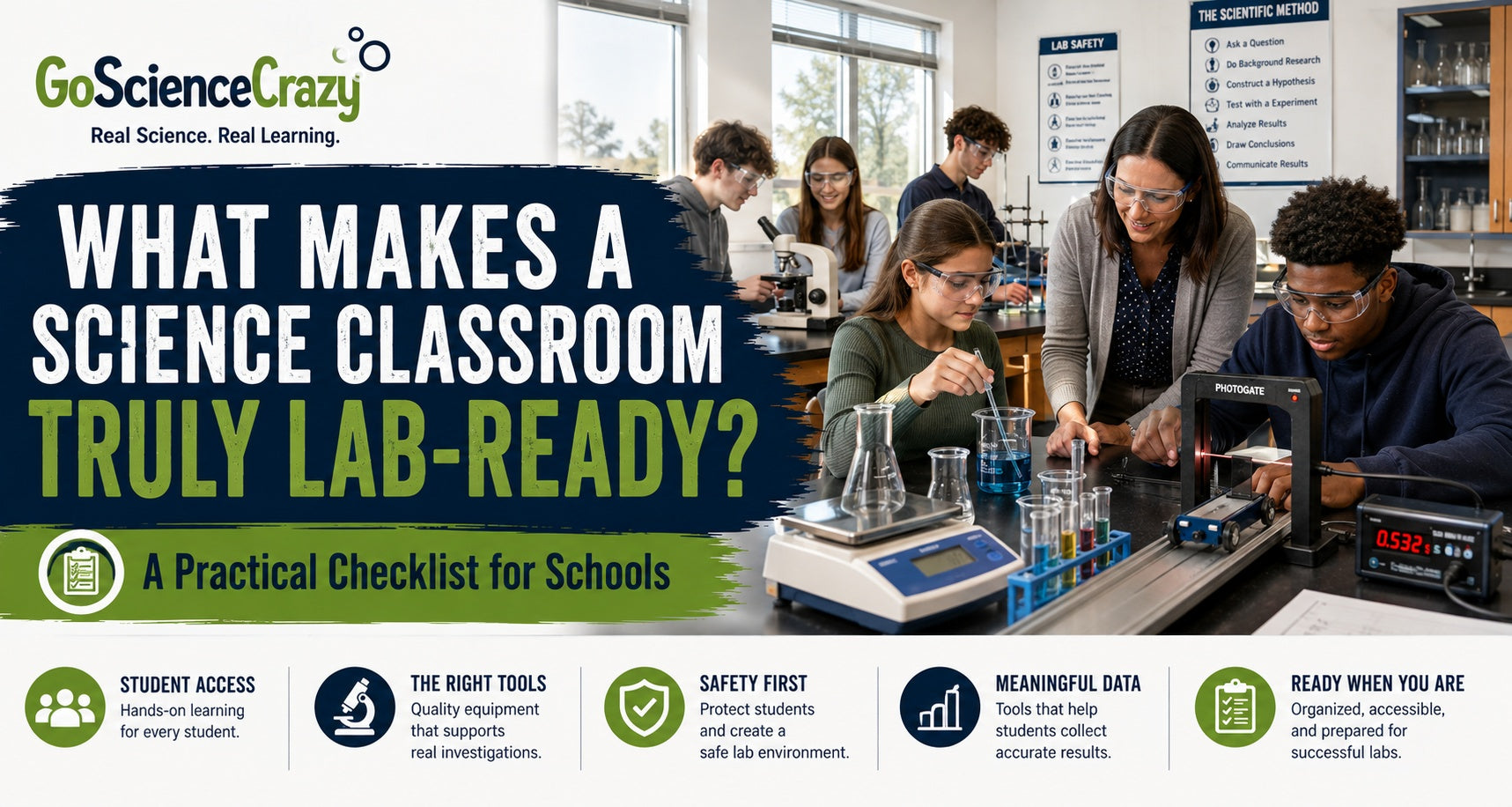
What Makes a Science Classroom Truly Lab-Ready?
A science classroom can have shelves full of equipment and still not be truly ready for hands-on science.
Being lab-ready is not simply about having beakers, microscopes, balances, and other equipment somewhere in the building. It is about whether teachers and students have the right tools, in working condition, in practical quantities, and available when learning calls for them.
For middle and high school science programs, that distinction matters.
When equipment is accessible and classroom-ready, teachers have more opportunities to move beyond explaining scientific concepts and give students the chance to observe, measure, test, question, and investigate them firsthand.
So, how lab-ready are your science classrooms?
Use this practical checklist to start the conversation.
☐ Can Students Participate Instead of Just Watch?
Teacher demonstrations can be powerful, but they should not be the only opportunity students have to experience a scientific concept.
Consider a class of 30 students investigating motion.
If there is only one set of equipment available, most students may watch the teacher perform the experiment. With equipment available for several small groups, those same students can make predictions, conduct trials, collect measurements, compare results, and defend their conclusions.
Ask:
Do we have enough equipment to give students meaningful opportunities to investigate science themselves?
The goal does not have to be one piece of equipment for every student. Small-group investigations can provide meaningful hands-on experiences while making practical use of classroom resources.
☐ Is Core Equipment Available in Practical Quantities?
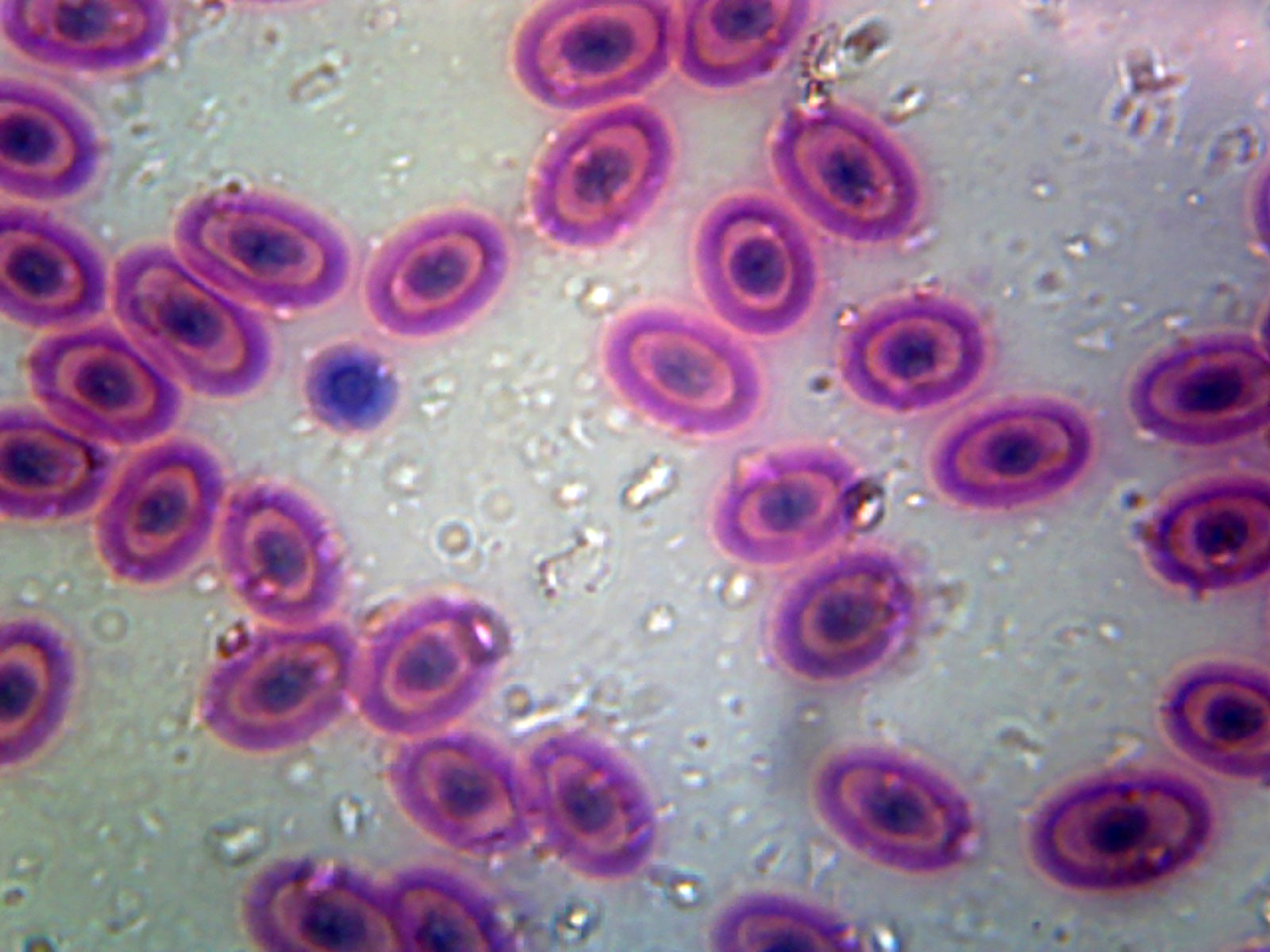
Having a microscope is different from being prepared for a microscopy lab.
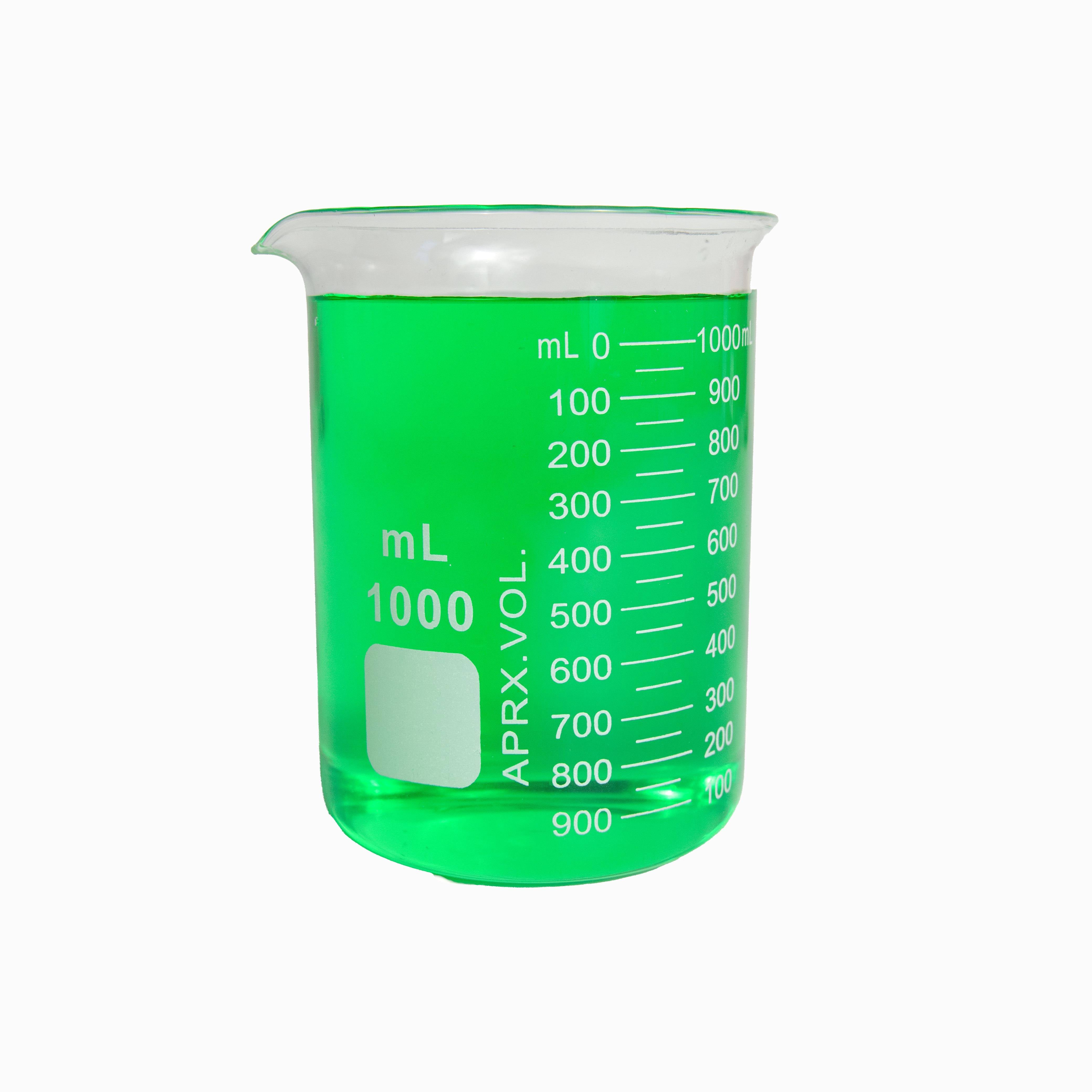
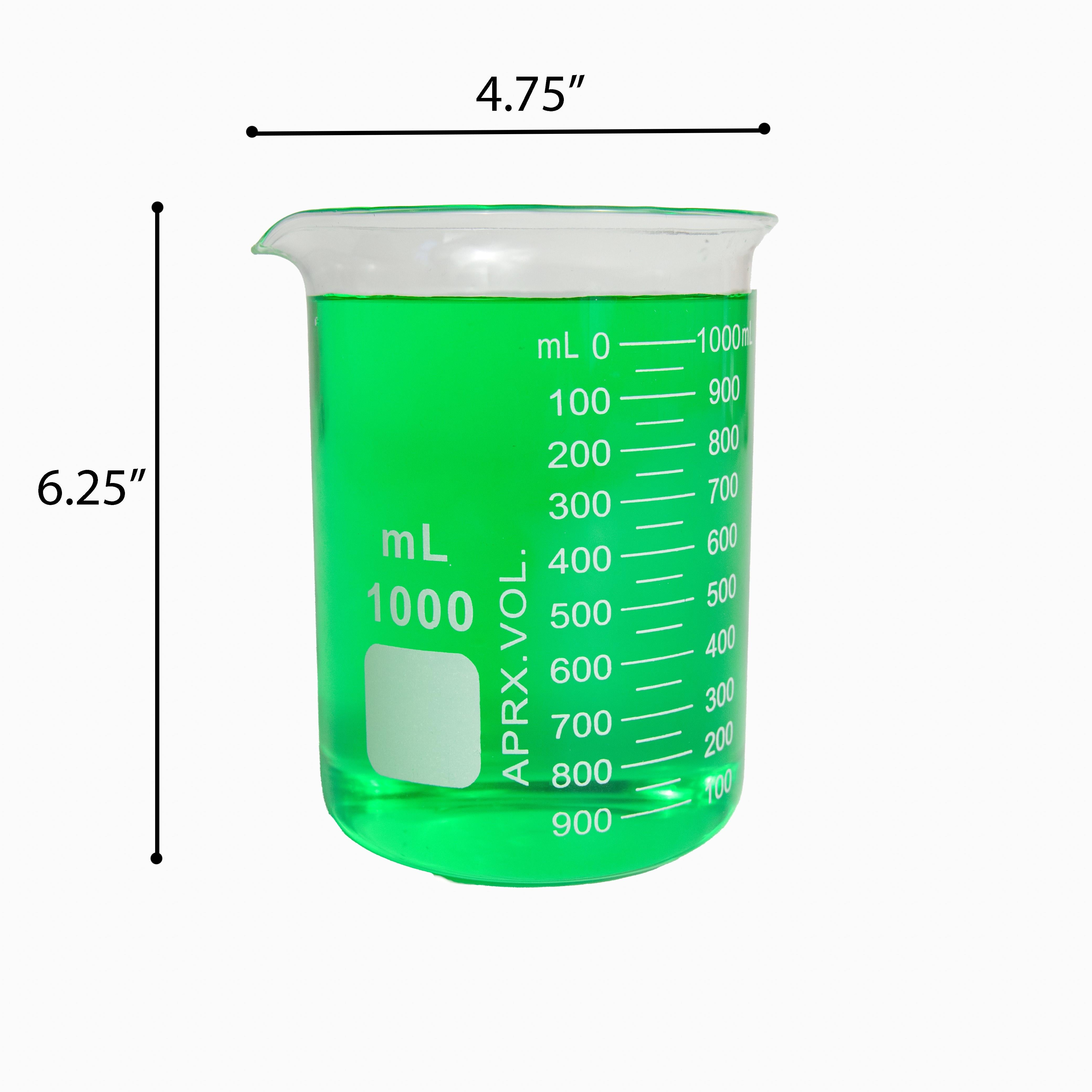
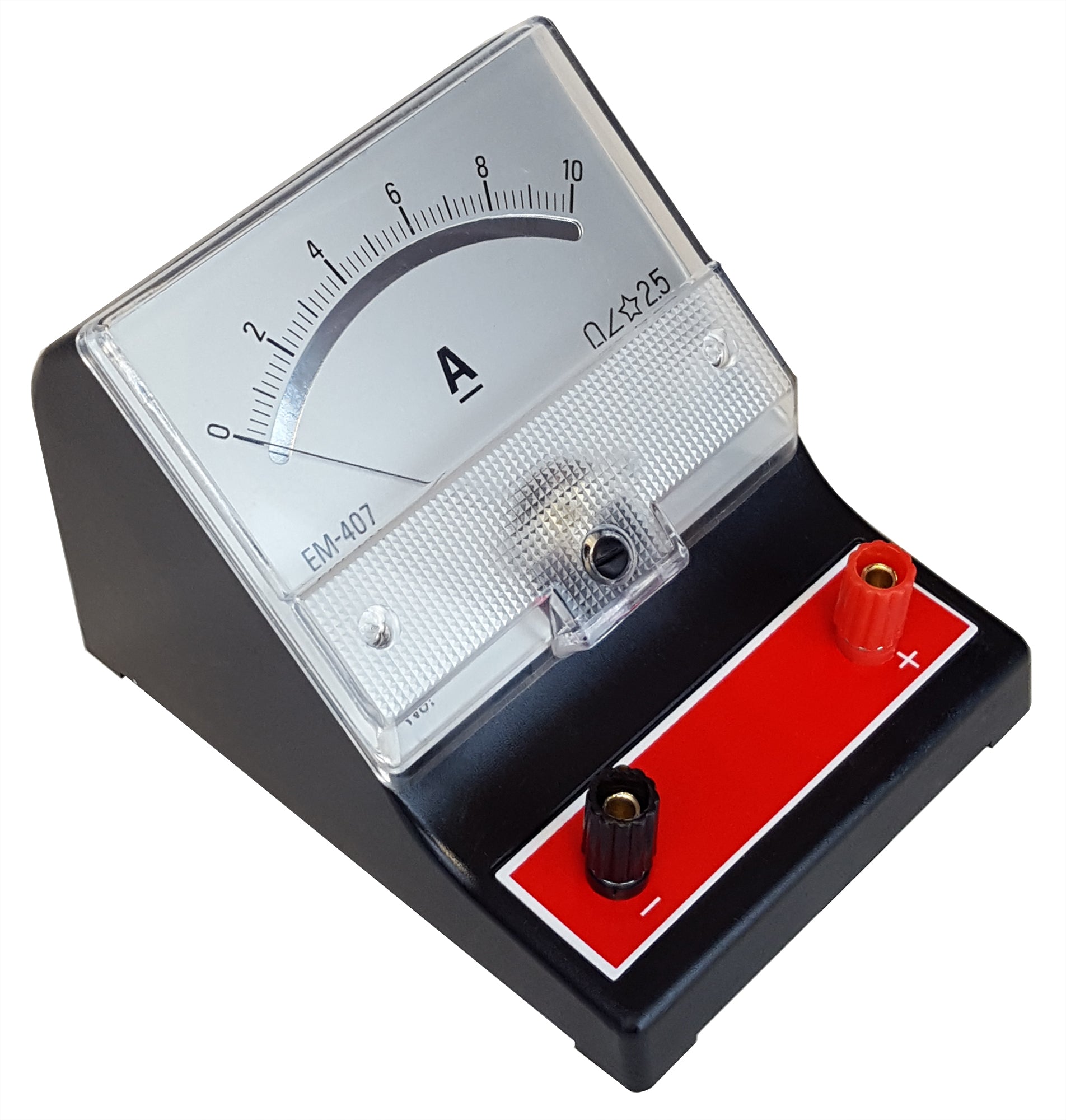
The same applies to balances, thermometers, glassware, circuit components, optics equipment, measurement tools, and other commonly used laboratory supplies.
When reviewing inventory, do not only ask:
“Do we have this?”
Also ask:
“Do we have enough of this to teach effectively?”
Consider typical class sizes, lab group sizes, the number of classes sharing equipment, and how frequently each item is used.
☐ Is the Equipment Ready When Teachers Need It?
An item appearing on an inventory list does not necessarily mean it is classroom-ready.
Equipment may be:
- Damaged or incomplete
- Missing essential components
- Inaccurate or in need of calibration
- Stored somewhere teachers cannot easily access it
- Shared between too many classrooms
- Outdated for current instructional needs
A regular equipment check can uncover these problems before a teacher discovers them while preparing tomorrow’s lab.
☐ Does the Equipment Support the Curriculum?
A strong science inventory should reflect what students are actually being asked to investigate.
Look at the curriculum alongside the equipment inventory.
Where are students expected to:
- Measure motion?
- Investigate forces?
- Explore electrical circuits?
- Observe microscopic structures?
- Analyze chemical reactions?
- Study waves, light, heat, or magnetism?
Then ask:
Do teachers have the tools necessary to turn those concepts into investigations?
This can help schools identify gaps based on instructional need, rather than simply creating another supply list.
☐ Can Students Collect Good Evidence?
Hands-on does not automatically mean effective.
Students also need tools that allow them to make meaningful observations and measurements.
Consider whether measurement equipment provides the accuracy and range appropriate for the investigations being performed.
Balances, thermometers, graduated cylinders, photogates, multimeters, spring scales, rulers, timers, and other measurement tools are not simply accessories to an experiment.
They are how students turn observations into evidence.
☐ Is Safety Built Into the Setup?
Safety should not begin after an investigation has already started.
Before labs, check that appropriate safety equipment is readily accessible and that workspaces can be set up without unnecessary hazards.
Consider:
- Eye protection
- Clearly labeled materials
- Uncluttered work surfaces
- Clear aisles
- Secure equipment
- Appropriate heat sources
- Proper storage
- Accessible cleanup materials
- Equipment appropriate for the intended classroom activity
A well-organized laboratory helps teachers spend less time correcting preventable setup problems and more time focusing on the investigation.
☐ Can Teachers Set Up and Reset Labs Efficiently?
There is another resource schools should not overlook:
Teacher time.
A great experiment becomes much harder to use regularly when gathering equipment takes 30 minutes, components are scattered across several storage areas, or teachers must repeatedly improvise because pieces are missing.
Consider organizing frequently used materials into investigation-ready sets or stations.
Ask teachers:
“What makes you decide not to run a lab you would otherwise like to use?”
Their answers may reveal equipment and organization problems that an inventory spreadsheet never will.
☐ Can Equipment Be Used Across Multiple Lessons?
Budgets matter.
One way to make science purchasing more effective is to consider how broadly an item can support instruction.
Before purchasing equipment, ask:
Can we use this for multiple investigations?
Can it support more than one grade or course?
Can students use it to investigate several concepts?
Is it durable enough for repeated classroom use?
An inexpensive item that rarely gets used is not necessarily a better investment than versatile equipment that becomes part of instruction year after year.
☐ Are Replacement Needs Identified Before They Become Emergencies?
Broken glassware, missing components, damaged leads, worn equipment, and depleted consumable supplies are part of running an active science program.
The problem comes when those needs are not discovered until the day before an investigation.
Consider establishing a simple process for teachers to report:
Replace | Repair | Replenish | Add
Instead of waiting for one large annual inventory, teachers can flag needs throughout the school year.
That gives department leaders and administrators a much clearer picture of what their science classrooms actually need.
One Question Every School Should Ask Its Science Teachers
When planning equipment purchases, it is tempting to begin with:
“What equipment do you need?”
Try asking a different question:
“What experiment or investigation would you do with your students if equipment were not the obstacle?”
That question can reveal something much more important.
Perhaps students are watching demonstrations because there are not enough materials for small groups.
Maybe an investigation was removed because existing equipment no longer works reliably.
Perhaps a teacher wants students collecting quantitative data but does not have enough measurement tools.
Or an entire topic may be taught primarily through textbooks and videos because the department lacks the equipment needed to investigate it.
Now the conversation is not simply about buying more equipment.
It is about identifying where access to equipment may be limiting opportunities for students to do science.
A Lab-Ready Classroom Is More Than a Room Full of Equipment
The ultimate goal is not to fill every cabinet.
It is to create an environment where a teacher can ask:
“What do you think will happen?”
And students have the opportunity to find out.
For teachers, department chairs, curriculum leaders, principals, superintendents, and district administrators, periodically reviewing science equipment through the lens of student participation can help ensure that investments in laboratory resources translate into meaningful classroom experiences.
Because students should not only learn what scientists have discovered.
They should have opportunities to investigate, measure, question, and discover for themselves.
At Go Science Crazy, we support middle and high school science classrooms with equipment for hands-on investigations across physics, chemistry, biology, Earth science, and more.
Whether you are replacing a few frequently used supplies, equipping a new science classroom, or planning purchases across a school or district, we are here to help you find practical solutions for your science program.
Explore Go Science Crazy:
https://gosciencecrazy.com/
Planning purchases for a school or district? Contact Go Science Crazy for help identifying equipment options for your classrooms, programs, and purchasing needs.
Go Science Crazy
Real questions. Real experiments. Real learning.